


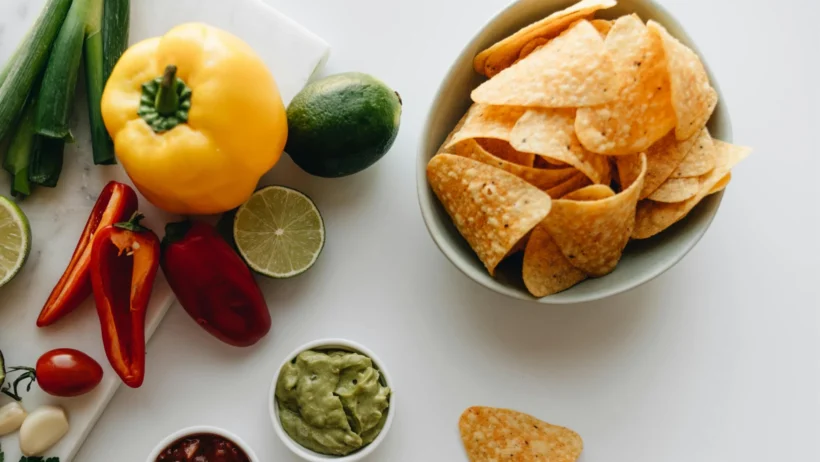

Most chips marketed as healthy are not. In Unbox Health’s testing, over 80% of chips and puffs, including baked, multigrain and high-protein ones, had poor nutritional profiles: high salt, refined carbs, and often trans fats or acrylamide. A few are genuinely better, but the label alone will not tell you which, so it pays to read the numbers.
- Are “healthy” chips actually healthy?
- What do “baked”, “multigrain” and “low-fat” really mean?
- What is acrylamide, and why does it matter?
- How much salt and trans fat are in chips?
- Are chips just empty calories?
- Why are chips a bigger problem for kids and teens?
- What are healthier snack choices?
- How do you choose a genuinely healthier chip?
- The bottom line
- Frequently asked questions
- Sources
Chips are comfort food, from cricket matches to the 4 PM slump. Today the shelves are full of packets promising “baked,” “multigrain,” “low-fat” and “high-protein,” and it is easy to drop them in the cart guilt-free. But do those labels hold up? When Unbox Health lab-tested a wide range of chips and puffs, most so-called healthy options told a different story. Here is what is really inside, and how to spot the few that are genuinely better.
Are “healthy” chips actually healthy?
Mostly, no. Across the chips and puffs Unbox Health tested, over 80% had poor nutritional profiles, including many baked, low-fat and high-protein products that market themselves as the smart choice. The problem is that “healthy” on the front of a pack is a marketing term, not a standard. A chip can be baked instead of fried and still be high in salt and refined starch, or add a little protein while staying calorie-dense and low in fibre. Some products are genuinely better, but you have to read the nutrition panel to find them.
What do “baked”, “multigrain” and “low-fat” really mean?
These words sound healthy but are often loopholes. Here is what each commonly hides.
| Label claim | What it often really means |
|---|---|
| Baked | Less frying oil, but frequently more salt and refined starch to keep it tasty |
| Multigrain | Contains several grains, but they may be refined, not whole grain |
| Low-fat | Fat cut, sugar or salt often raised to compensate |
| High-protein | Some added protein on top of a still calorie-dense, salty base |
| Zero trans fat | Can still contain small amounts, hidden by unrealistically small serving sizes |
What is acrylamide, and why does it matter?
Acrylamide is a compound that forms naturally when starchy foods like potatoes are cooked at high temperatures, such as frying or baking. It is classified by the International Agency for Research on Cancer as a probable human carcinogen (Group 2A), based on strong animal evidence and limited human evidence. Fried potato chips are among the highest dietary sources; some have tested well above the European Union reference level of 750 micrograms per kilogram for potato crisps. It builds up with regular intake, which is why frequent chip eating, especially from childhood, is worth limiting.
How much salt and trans fat are in chips?
A single packet of chips can carry anywhere from about 170 to over 1,800 mg of sodium per 100g, a large share of the daily limit, which matters most for children. Trans fats are the other concern: they raise “bad” LDL cholesterol and heart-disease risk. India’s FSSAI has capped industrial trans fats at 2% of total oils and fats since 2022, which helps, but products can still declare “zero trans fat” while containing small amounts, because a small stated serving size rounds the number down. Judging by the per-100g figures, not the per-serving ones, gives you the real picture.
Are chips just empty calories?
Largely, yes. Chips are calorie-dense but nutrient-poor, offering little fibre, vitamins or minerals. That combination makes it easy to overeat while staying under-nourished, and regular heavy intake is linked to weight gain and poor diet quality. They are fine as an occasional treat, but they work poorly as an everyday snack, especially for children whose appetite they fill without feeding.
Why are chips a bigger problem for kids and teens?
Because they are eating a lot of them. In a study of 1,026 urban teenagers aged 14 to 16 in Kolkata, 70% reported eating three or more servings of energy-dense snacks, including chips, the previous day, averaging about 6.25 servings a day, the highest of any food group tracked. This shift from home-cooked meals to packaged snacks is part of a wider nutrition transition in urban India, creating a double burden of rising obesity alongside nutrient deficiencies.
What are healthier snack choices?
You do not have to give up crunch, just choose better and keep portions honest:
- Roasted over fried: roasted chana, makhana (fox nuts) and roasted millet puffs give crunch with more fibre and protein.
- Real whole grains: if you buy packaged chips, look for a whole grain or pulse as the first ingredient, not refined flour or potato starch.
- Nuts and seeds: a small handful satisfies with healthy fats and protein.
- Portion it out: serve a small bowl instead of eating from the packet, which drives overeating.
- Homemade: air-fried or baked vegetable and millet snacks let you control salt and oil.
How do you choose a genuinely healthier chip?
Ignore the front of the pack and read the nutrition panel: aim for lower sodium, zero or minimal trans fat, a whole grain or pulse as the main ingredient, and a decent hit of fibre and protein per 100g. Because label claims are not always accurate, and because acrylamide and contaminants never appear on a label, independent lab testing is the only way to see the full picture. Unbox Health lab-tests market-bought chips and puffs at NABL-accredited labs for nutrition, label accuracy and toxicants like acrylamide, trans fats and heavy metals, so you can compare tested chips and puffs ratings with their full lab reports. For the same label-reading approach applied to breakfast, see whether your breakfast cereal is actually healthy.
The bottom line
“Healthy” chips are mostly a marketing story. Baked, multigrain and high-protein versions can still be high in salt, refined carbs, trans fats and acrylamide, and lab testing shows most fall short. A few are genuinely better, but the front of the pack will not tell you which. Read the per-100g nutrition, favour roasted whole-grain and pulse-based snacks, keep portions small, and let independent lab data guide the choice, especially for what your kids eat every day.
Frequently asked questions
Are multigrain or high-protein chips actually healthy?
Not necessarily. “Multigrain” grains may be refined, and “high-protein” chips are still often salty and calorie-dense. A little added protein does not cancel out a poor base. Look for a whole grain or pulse as the first ingredient and a genuinely better nutrition panel.
Is acrylamide in chips dangerous?
Acrylamide is classed as a probable human carcinogen, and fried potato chips are a major dietary source. Occasional chips are not a crisis, but regular, heavy intake over years, especially from childhood, is worth limiting. Choosing less-fried options and eating chips less often reduces exposure.
How much sodium is in a packet of chips?
It varies widely, from roughly 170 to over 1,800 mg per 100g. Because portion sizes on the pack are often small, the per-serving number can look modest while a whole packet delivers a large share of your daily salt limit. Read the per-100g value.
Can chips really say “zero trans fat” and still contain it?
Yes. A product can round trans fat down to zero on the label when the stated serving is small, even though some is present. India has capped industrial trans fats at 2% of fats, which helps, but the per-100g figure and the oil type in the ingredients are more reliable than the “zero” claim.
What is a healthier alternative to chips?
Roasted chana, makhana, roasted millet puffs, nuts and seeds, or home air-fried vegetable snacks give you crunch with more fibre and protein and less salt. If you do buy packaged chips, keep the portion small and pick one with a whole grain or pulse base.
Sources
- IMARC Group. India Snacks Market Report. imarcgroup.com
- International Agency for Research on Cancer (IARC) / EUFIC. Acrylamide in food: what it is and how to reduce levels (Group 2A probable carcinogen; EU reference levels). eufic.org
- Food Safety and Standards Authority of India (FSSAI). Regulation capping industrial trans fatty acids at 2% (2022). fssai.gov.in
- Rathi N, Riddell L, Worsley A. Food consumption patterns of adolescents aged 14-16 years in Kolkata, India. Nutrition Journal. 2017;16(1):50. doi.org/10.1186/s12937-017-0272-3
- Unbox Health. Chips & Puffs: lab-tested ratings. unboxhealth.in
Reviewed by: Mruga Dholakia, Food Scientist & Nutritionist | Last updated: July 2026