


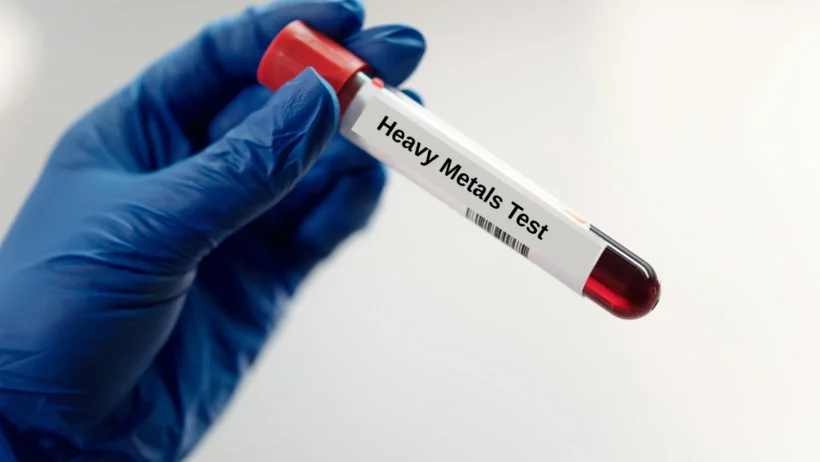

Lead, arsenic, cadmium and mercury occur in trace amounts in almost all food due to soil and water contamination, mostly from industrial activity. FSSAI sets maximum permissible limits for each under the Food Safety and Standards (Contaminants, Toxins and Residues) Regulations, 2011, as amended. Arsenic exposure via groundwater is a documented, elevated risk in parts of South Asia including eastern India, making rice and groundwater-irrigated crops worth watching.
- What Are Heavy Metals and Why Do They Matter in Food?
- How Do Heavy Metals Get Into Food?
- What Are the Health Effects of Arsenic?
- What Are the Health Effects of Lead?
- What Are the Health Effects of Cadmium?
- What Are the Health Effects of Mercury?
- How Strong Is the Evidence Behind These Health Claims?
- What Are FSSAI’s Permissible Limits for Heavy Metals in Food?
- Which Foods Carry the Highest Risk in India?
- How Can You Reduce Your Exposure to Heavy Metals?
- Who Is Most at Risk?
- The Bottom Line
- Frequently Asked Questions
- Sources
What Are Heavy Metals and Why Do They Matter in Food?
In a food-safety context, “heavy metals” usually refers to a small group of toxic elements with no known nutritional benefit: lead, arsenic, cadmium and mercury. Unlike essential minerals such as iron or zinc, the body has no biological need for them, and they are harmful even in small, repeated doses because they accumulate in tissue over time rather than being fully cleared.
Every food contains trace contaminants, since nothing grown in soil or drawn from water is entirely free of them. The real question is not whether a food contains zero heavy metals, that is not realistic, but whether the level stays within the limits regulators consider safe.
How Do Heavy Metals Get Into Food?
All four metals occur naturally in soil in minute amounts, but industrial activity since the 18th century has raised background levels considerably. Arsenic increases with soil erosion and is also used in some pesticides. Lead enters soil and groundwater from batteries, paints, pigments and vehicle emissions, which is why produce grown near highways carries higher risk. Cadmium enters through certain industrial discharges and phosphate fertilisers. Mercury’s industrial use has been declining globally, including its removal from paints and pesticides, but it still cycles through the atmosphere into water bodies, where it accumulates most in long-lived predatory fish.
Crops absorb these metals from contaminated soil and irrigation water; fish and shellfish accumulate them from water; and processing or storage in certain metal containers can add small additional amounts.
Cooking method also plays a measurable role. A 2015 study (Menon et al., published in the journal that examines food chemistry) found that boiling rice in excess water, roughly 6 to 10 cups per cup of rice, and draining it before serving, cut inorganic arsenic by an average of 40% in polished long-grain rice, 50% in brown rice and 60% in parboiled rice, since arsenic is water-soluble and leaches into the discarded water. The trade-off is that this method also strips 50 to 70% of added iron, folate, niacin and thiamin from enriched rice, so it matters most for arsenic-conscious households eating unenriched or brown rice, not as a universal recommendation.
What Are the Health Effects of Arsenic?
Groundwater arsenic contamination is a well-documented, elevated risk across parts of South Asia, including eastern India and Bangladesh, primarily affecting drinking water and water-intensive crops like rice. Chronic low-level exposure is linked to reduced red blood cell production, changes in heart rhythm, and damage to blood vessels; acute high-dose poisoning can be fatal. Long-term exposure is also linked to skin lesions, certain cancers, and interference with neurotransmitter signalling.
What Are the Health Effects of Lead?
Lead is toxic to multiple organ systems even at low exposure. It is associated with brain and nerve damage (with the strongest, best-established harms seen in children’s neurodevelopment), lung and liver injury, and cardiovascular disease. Lead also interferes with haemoglobin synthesis and has been associated with reduced sperm count in adult men. Lead acid batteries, paints and pigments are its dominant sources in the Indian environment, and produce grown in contaminated soil or near industrial or high-traffic areas carries higher risk.
What Are the Health Effects of Cadmium?
Cadmium is less common in soil than the other three metals but is classified as a human carcinogen by the International Agency for Research on Cancer. It accumulates primarily in the kidneys over a lifetime, and long-term exposure is linked to kidney dysfunction and bone demineralisation. Rice and other cereals grown in cadmium-contaminated soil, along with certain leafy vegetables, are the main dietary sources.
What Are the Health Effects of Mercury?
Mercury enters oceans and water bodies from atmospheric deposition and some industrial discharge. Because larger, longer-lived predatory fish sit higher in the food chain, they accumulate substantially more mercury than smaller fish over their lifetimes, a process called biomagnification. High mercury exposure can permanently damage the brain and kidneys, cause liver toxicity, and induce oxidative stress that affects cellular function broadly.
How Strong Is the Evidence Behind These Health Claims?
Toxicology on heavy metals draws on a mix of occupational-exposure human data, environmental epidemiology, and laboratory/animal mechanistic work. The table below separates what is well established in humans from what rests more on mechanistic or animal evidence.
| Metal | Best-established human harm | Tested in humans? | How settled |
|---|---|---|---|
| Arsenic | Skin lesions, vascular disease and certain cancers from chronic groundwater exposure (Bangladesh/West Bengal cohorts) | Yes, large population cohorts | Well established for chronic drinking-water exposure; food-only exposure risk is less directly quantified |
| Lead | Neurodevelopmental harm in children at low blood-lead levels | Yes, extensive epidemiology | Well established; considered to have no known safe threshold in children |
| Cadmium | Kidney dysfunction and bone loss from long-term dietary exposure (Itai-itai disease, Japan) | Yes, historical human outbreak plus ongoing surveillance | Well established for high, prolonged exposure; low-level dietary risk is harder to quantify precisely |
| Mercury | Neurological harm from high-dose fish-based exposure (Minamata disease, Japan) | Yes, historical human outbreak plus fish-consumption cohorts | Well established at high exposure; typical dietary fish intake risk depends heavily on species and frequency |
What Are FSSAI’s Permissible Limits for Heavy Metals in Food?
FSSAI regulates heavy metal content under the Food Safety and Standards (Contaminants, Toxins and Residues) Regulations, 2011, which has been amended multiple times since, including a 2015 update that added specific limits for more food categories. The regulation sets category-specific maximum limits rather than one blanket number, and international bodies like Codex Alimentarius (FAO/WHO) set comparable reference limits that FSSAI’s schedule broadly tracks. Representative limits commonly cited from the schedule include roughly 0.3 mg/kg (ppm) lead in leafy vegetables (in line with the Codex reference value), lower limits for root and fruit vegetables, and lower arsenic limits in milk than in most solid foods. Because the schedule is amended periodically and limits vary by food category, always check the current FSSAI notification for the specific product category rather than relying on one generic number.
| Metal | Category most commonly restricted | Regulatory approach |
|---|---|---|
| Lead | Leafy vegetables (stricter), root/bulb/fruit vegetables (more lenient) | Category-specific limits, broadly in line with Codex reference values |
| Arsenic | Milk (stricter), most other foods (more lenient) | Category-specific limits under the 2011 Regulations as amended |
| Cadmium | Polished rice, leafy and fruiting vegetables | Category-specific limits, tightened in more recent amendments |
| Mercury | Fish, with a higher allowance for large predatory species (tuna, marlin, swordfish) | Species-tiered limit reflecting biomagnification |
Which Foods Carry the Highest Risk in India?
Rice grown in high-arsenic or high-cadmium soil is the most studied dietary risk in the Indian and South Asian context, since rice is a water-intensive crop and paddy fields readily take up soil-borne metals. Large predatory sea fish (tuna, swordfish, marlin) carry the most mercury of any common food. Leafy vegetables grown near industrial zones or busy roads, and produce irrigated with contaminated groundwater, carry higher lead and arsenic risk than the same crop grown elsewhere. Certain Ayurvedic and traditional preparations that intentionally include metal-based ingredients (some Rasa Shastra formulations) have also been documented in published testing to carry meaningfully elevated mercury or lead content compared to conventional supplements.
How Can You Reduce Your Exposure to Heavy Metals?
No single step eliminates dietary heavy metal exposure, since trace amounts are unavoidable, but a few practices meaningfully lower it. Vary your grain sources rather than eating rice as the only staple daily, since this limits cumulative exposure to any one crop’s soil profile. Choose smaller, shorter-lived fish over large predatory species like swordfish and marlin, which biomagnify mercury the most. Wash and peel root vegetables, since metals concentrate more in skins and roots grown in contact with soil. For supplements, prefer brands that publish independent lab-tested heavy metal results rather than relying on label claims alone, since routine heavy metal testing of packaged food and supplements in India is not universal.
Who Is Most at Risk?
Children face disproportionately higher risk from lead specifically, because their developing nervous systems are more vulnerable and their bodies absorb a higher fraction of ingested lead than adults do; there is no established safe threshold for lead exposure in children. Pregnant women are a second high-priority group, since several of these metals cross the placenta. People who eat large predatory fish frequently, and people in occupations or living near industrial sites with higher environmental exposure, also carry elevated risk. If you fall into any of these groups, treat the general-population guidance above as a floor, not a ceiling, and discuss specific dietary or testing questions with a doctor.
The Bottom Line
Trace heavy metals in food are unavoidable and mostly not a cause for alarm at the levels found in a varied, typical diet. The exceptions worth real attention are chronic high-arsenic groundwater regions, frequent consumption of large predatory fish, and food grown in visibly contaminated soil or near industrial sites. FSSAI sets category-specific limits for lead, arsenic, cadmium and mercury under its Contaminants, Toxins and Residues Regulations, but routine testing of packaged foods is not universal in practice, which is why independent lab-tested ratings matter. Check independent heavy metal test results for supplements and packaged foods on Unbox Health before assuming a label claim is verified.
Frequently Asked Questions
What FSSAI limits apply to heavy metals in food?
FSSAI sets category-specific maximum limits under the Food Safety and Standards (Contaminants, Toxins and Residues) Regulations, 2011, as amended, rather than one blanket number. Limits differ by food category, for example leafy vegetables have a stricter lead limit than root vegetables, and fish limits for mercury are higher for large predatory species. Always check the current schedule for the specific food category.
Which foods carry the highest heavy metal risk in India?
Rice grown in high-arsenic or high-cadmium soil is the most studied dietary risk in South Asia, since paddy fields readily take up soil-borne metals. Large predatory sea fish like tuna, swordfish and marlin carry the most mercury. Produce grown near industrial zones, busy roads or irrigated with contaminated groundwater carries higher lead and arsenic risk than the same crop grown elsewhere.
Can cooking rice reduce arsenic content?
Yes. Boiling rice in excess water, roughly 6 to 10 cups per cup of rice, and draining it before serving has been shown to cut inorganic arsenic by 40 to 60% depending on rice type, since arsenic is water-soluble and leaches out. The trade-off is that this method also strips 50 to 70% of added iron, folate, niacin and thiamin from enriched rice.
Who is most at risk from heavy metals in food?
Children face disproportionately higher risk from lead because their developing nervous systems are more vulnerable and they absorb a higher fraction of ingested lead than adults; no safe threshold has been established for children. Pregnant women are a second high-priority group since these metals cross the placenta, along with people who eat large predatory fish frequently or live near industrial sites.
Are Ayurvedic supplements a heavy metal risk?
Some Rasa Shastra and metal-containing Ayurvedic preparations have been documented in published testing to carry meaningfully elevated mercury or lead content compared to conventional supplements. This does not apply to all Ayurvedic products, but it is a reason to check independent lab-tested results rather than assume a natural or traditional label means low heavy metal content.
Does the human body clear heavy metals naturally?
Only partially and slowly. Unlike water-soluble toxins the body clears quickly, lead, cadmium and mercury accumulate in bone, kidney and nervous tissue respectively, and clearance can take months to years depending on the metal and the tissue. This is why repeated low-level exposure over time matters more than any single meal.
Sources
- FSSAI. Food Safety and Standards (Contaminants, Toxins and Residues) Regulations, 2011, as amended (including the 2015 update). https://fssai.gov.in/upload/uploadfiles/files/Contaminants_Regulations.pdf
- Ali-Mood M, Naseri K, Tahergorabi Z, et al. Toxic Mechanisms of Five Heavy Metals: Mercury, Lead, Chromium, Cadmium, and Arsenic. Frontiers in Pharmacology. 2021;12:643972.
- Tchounwou PB, Yedjou CG, Patlolla AK, Sutton DJ. Heavy Metals Toxicity and the Environment. EXS. 2012;101:133-164.
- Liang G, Gong W, Li B, et al. Analysis of Heavy Metals in Foodstuffs and an Assessment of the Health Risks to the General Public via Consumption in Beijing, China. International Journal of Environmental Research and Public Health. 2019;16:909.
- Abdalla AA, Smith RE. Determination of Mercury in Ayurvedic Dietary Supplements That Are Not Rasa Shastra Using the Hydra-C Direct Mercury Analyzer. International Journal of Analytical Chemistry. 2013;2013:628397.
- Menon M, Dong W, Chen X, Hufton J, Rhodes EJ. Improved rice cooking approach to maximise arsenic removal while preserving nutrient elements. Science of the Total Environment. 2021;755:143008 (cooking method findings originally reported 2015 onward).
Reviewed by: UH Editorial Team | Last updated: August 2026