


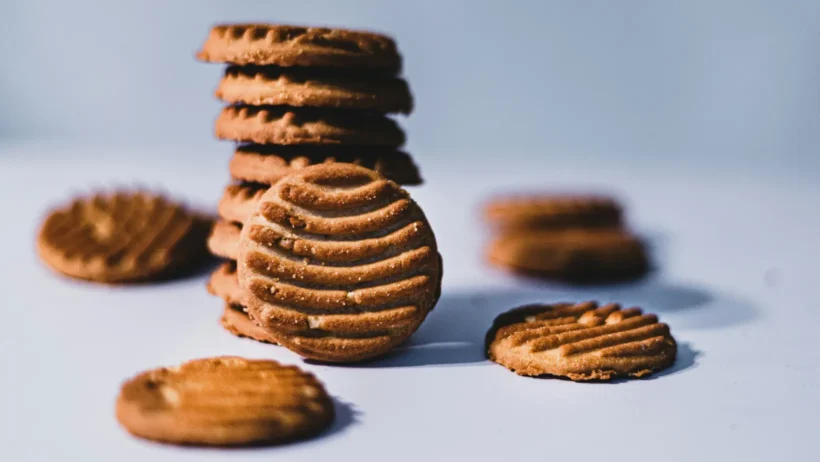

Most packaged biscuits are ultra-processed food made from refined flour, added sugar, and fat, and a 2024 BMJ umbrella review of nearly 10 million people links frequent ultra-processed food intake to higher risk of obesity, type 2 diabetes, and heart disease. “Sugar-free” only means 0.5 g or less sugar per 100 g under FSSAI rules; it does not mean low calorie or low fat. Occasional biscuits are not the issue, a daily habit is.
- Are Packaged Biscuits Actually Bad for Your Health?
- What Do Biscuits Contain That Makes Them a Health Concern?
- What Does the Evidence Say About Ultra-Processed Foods?
- Are Sugar-Free and Diabetic-Friendly Biscuits Actually Healthier?
- Are Digestive and High-Fibre Biscuits Different?
- What Does FSSAI Say About Trans Fat in Biscuits?
- How Do Cream Biscuits Compare to Plain or Marie Biscuits?
- How Do You Read a Biscuit Label Correctly?
- What Does the Evidence Actually Support?
- Practical Ways to Eat Biscuits Without Overdoing It
- The Bottom Line
- Frequently Asked Questions
- Sources
Are Packaged Biscuits Actually Bad for Your Health?
Packaged biscuits are not harmful as an occasional treat, but frequent daily consumption is linked to higher risk of weight gain, poor blood sugar control, and long-term metabolic problems, mainly because most biscuits are made from refined flour, added sugar, and fat with very little fibre or protein to balance them. Biscuits and tea are woven into Indian daily life, from office breaks to hospital waiting rooms, which is exactly why the habit is worth examining rather than the occasional biscuit itself.
The concern is one of frequency and quantity, not a single biscuit ruining an otherwise balanced diet. Someone eating two biscuits with tea once a week faces a very different picture than someone eating a full packet daily, even though both are technically eating “biscuits.”
What Do Biscuits Contain That Makes Them a Health Concern?
Most packaged biscuits and cookies are made primarily from refined (maida) flour, added sugar, and saturated or partially hydrogenated fats, a combination that is calorie-dense but nutrient-poor. Refined flour has had most of its fibre and bran removed during milling, so it digests quickly and does little to keep you feeling full, which is part of why biscuits are easy to overeat in one sitting.
This nutrient profile, high in refined carbohydrate and fat with minimal fibre, protein, vitamins, or minerals, is the technical reason biscuits are classified as ultra-processed food in most dietary research, alongside items like packaged snacks, sodas, and instant noodles.
What Does the Evidence Say About Ultra-Processed Foods?
A 2024 umbrella review in the BMJ, pooling 45 meta-analyses covering close to 10 million participants, found consistent associations between higher ultra-processed food intake and increased risk of all-cause mortality, cardiovascular disease, type 2 diabetes, obesity, and common mental health disorders. The review authors were explicit that this is observational, association-based evidence, not proof that ultra-processed food directly causes each outcome, since people who eat more ultra-processed food also tend to differ in other diet and lifestyle factors.
That caveat matters, but it does not erase the pattern: the associations held up across dozens of independent studies and multiple outcomes, which is why major health bodies now treat high ultra-processed food intake as a genuine risk factor worth reducing, even without a single definitive trial proving direct causation.
Are Sugar-Free and Diabetic-Friendly Biscuits Actually Healthier?
A “sugar-free” biscuit is genuinely lower in sugar, since FSSAI only permits the claim when a product has 0.5 g or less of total sugar per 100 g, but it is not automatically lower in calories or fat. Many sugar-free biscuits still use the same refined flour and fat base as regular biscuits, sometimes with sugar alcohols or starches substituted for sugar, which can leave the calorie and fat content close to the original product.
This means eating several “sugar-free” biscuits on the assumption that the label makes them a safe, unlimited snack can still contribute meaningfully to calorie intake and, depending on the substituted starches, to blood sugar response. The claim is accurate as far as it goes; the problem is treating one accurate claim as a stand-in for the whole nutrition picture.
Are Digestive and High-Fibre Biscuits Different?
Digestive and high-fibre biscuits are usually a modest improvement, not a health food: they typically add some whole wheat or bran, which genuinely contributes to fibre intake, but most are still made mostly from refined flour with meaningful amounts of added sugar and fat. The fibre content is real and worth something, but it does not cancel out the rest of the nutrition panel.
The practical way to judge a specific digestive or high-fibre biscuit is to compare its total fibre, sugar, and saturated fat per 100 g against a plain biscuit of the same brand, since formulations vary meaningfully between products marketed under similar “digestive” or “fibre” branding.
What Does FSSAI Say About Trans Fat in Biscuits?
India has capped industrial trans fat at 2% of total oils and fats in food since 1 January 2022, down from a 3% cap that took effect in January 2021, under FSSAI’s Food Safety and Standards (Prohibition and Restriction on Sales) Second Amendment Regulations. This is a binding regulatory limit, not a voluntary industry target, and it applies to biscuits and bakery products that use vanaspati or partially hydrogenated vegetable oil.
A legal cap on trans fat does not mean biscuits contain zero trans fat; it means the amount is bounded and regulated. Checking the ingredient list for “vanaspati” or “partially hydrogenated vegetable oil” is still a useful habit, since their presence indicates some trans fat even within the legal limit.
How Do You Read a Biscuit Label Correctly?
The nutrition panel, not the front-of-pack claim, is where the real information is: check total sugars, total fat, and saturated fat per 100 g, and scan the ingredient list for sugar synonyms like glucose syrup, invert sugar syrup, or maltodextrin, and for trans fat sources like vanaspati or partially hydrogenated oil. Front-of-pack words like “digestive,” “high-fibre,” or “diabetic-friendly” are marketing terms layered on top of whatever the nutrition panel actually shows.
Serving size is a common trap: a label listing values “per 100 g” can understate what you actually eat if a packet or a typical serving is smaller or larger than 100 g, so it helps to check the pack weight and do the arithmetic for how many biscuits you realistically eat in one sitting, rather than the manufacturer’s stated serving size.
How Do Cream Biscuits Compare to Plain or Marie Biscuits?
Cream-filled and chocolate-coated biscuits are generally higher in sugar and fat per biscuit than plain tea biscuits like Marie, mainly because the cream or chocolate layer adds sugar and fat on top of the base biscuit itself, rather than replacing any of it. A plain Marie biscuit is lighter and less sweet than a cream biscuit of similar size, but it is still made largely from refined flour and added sugar, so “lighter than a cream biscuit” is a relative comparison, not a health claim on its own.
Exact calorie and sugar figures vary meaningfully by brand and format, so the useful habit is comparing the nutrition panel of the specific products in front of you rather than relying on a general rule like “plain is always better.” Within the same brand’s range, checking sugar and fat per 100 g will usually show cream and chocolate variants sitting higher than the plain version.
What Does the Evidence Actually Support?
| Claim | Best available evidence | Tested in humans? | How settled |
|---|---|---|---|
| High ultra-processed food intake is linked to obesity, type 2 diabetes, heart disease | BMJ 2024 umbrella review, 45 meta-analyses, ~10 million participants | Yes (observational) | Consistent association; causality not established |
| “Sugar-free” biscuits contain less sugar | FSSAI Advertising and Claims Regulations 2018 (regulatory definition) | N/A (regulatory) | Settled by regulation: 0.5 g/100 g or less |
| “Sugar-free” biscuits are lower in calories or fat | No consistent evidence; depends on formulation | N/A | Not established as a general rule |
| India’s trans fat cap reduces industrial trans fat in packaged food | FSSAI Second Amendment Regulations, 2021 (2% cap from Jan 2022) | N/A (regulatory) | Settled by regulation |
Practical Ways to Eat Biscuits Without Overdoing It
- Treat biscuits as an occasional item rather than a daily default with every cup of tea.
- Check total sugars and saturated fat per 100 g on the nutrition panel before trusting a front-of-pack claim.
- Scan the ingredient list for vanaspati or partially hydrogenated oil, and for sugar synonyms like glucose syrup or maltodextrin.
- Do the serving-size math yourself; “per 100 g” figures can be misleading if you eat more or less than 100 g at a time.
- If you already eat a lot of refined carbohydrate elsewhere in the day, cut back there rather than assuming a “healthier” biscuit solves the balance on its own.
- For a side-by-side look at how specific biscuit brands compare on sugar, fat, and label accuracy, see Unbox Health’s biscuits and cookies ratings page.
The Bottom Line
Biscuits are not going to disappear from Indian tea time, and they do not need to. The evidence points to frequency and quantity, not the occasional biscuit, as the real driver of risk, and marketing terms like “sugar-free” or “digestive” describe one part of a product’s nutrition profile, not the whole picture. Read the panel, not just the pack, and keep biscuits an occasional habit rather than a daily one.
Frequently Asked Questions
Are sugar-free biscuits actually healthier?
Not necessarily. FSSAI allows a 'sugar-free' claim only if a product has 0.5 g or less sugar per 100 g, so the sugar reduction itself is real. But many sugar-free biscuits keep the same refined flour and fat content as regular ones, so calories and blood sugar response can be similar. Check the full nutrition panel, not just the front-of-pack claim.
Are digestive or high-fibre biscuits actually better for you?
They are usually a smaller improvement than the name suggests. Digestive and high-fibre biscuits typically add a modest amount of whole wheat or bran, which is genuinely useful for fibre intake, but most are still made mostly from refined flour with meaningful added sugar and fat. They are a marginally better choice than cream biscuits, not a health food.
Do Indian biscuits still contain trans fat?
Legally, industrial trans fat in Indian foods has been capped at 2% of total fat since January 2022, down from 3% in 2021, under FSSAI's amended trans-fat regulations. This is a real, enforceable limit, not a voluntary target, though it does not mean biscuits are trans-fat free: the label should be checked for partially hydrogenated oils or vanaspati.
How much sugar is actually in a packet of cream biscuits?
This varies significantly by brand and format, so there is no single number that applies to all cream biscuits. The reliable way to know is to check the nutrition panel's 'total sugars per 100 g' and multiply by the number of biscuits you eat, since serving sizes on packs are often smaller than what people actually eat in one sitting.
What should I check on a biscuit label before buying?
Look at total sugars, total fat, and saturated fat per 100 g on the nutrition panel, not just the front-of-pack claim, and scan the ingredient list for partially hydrogenated oil or vanaspital (trans fat sources), and for sugar synonyms like glucose syrup or maltodextrin, which do not always show up as 'sugar' at first glance.
Sources
- Lane, M. M., et al. (2024). Ultra-processed food exposure and adverse health outcomes: umbrella review of epidemiological meta-analyses. BMJ, 384, e077310.
- Food Safety and Standards Authority of India. Food Safety and Standards (Advertising and Claims) Regulations, 2018. https://fssai.gov.in/upload/uploadfiles/files/Compendium_Advertising_Claims_Regulations_04_03_2021.pdf
- Food Safety and Standards Authority of India. Food Safety and Standards (Prohibition and Restriction on Sales) Second Amendment Regulations, 2021 (industrial trans fat limits).
- World Health Organization. (2015). Guideline: Sugars intake for adults and children.
Reviewed by: Mruga Dholakia, Food Scientist & Nutritionist | Last updated: August 2026