


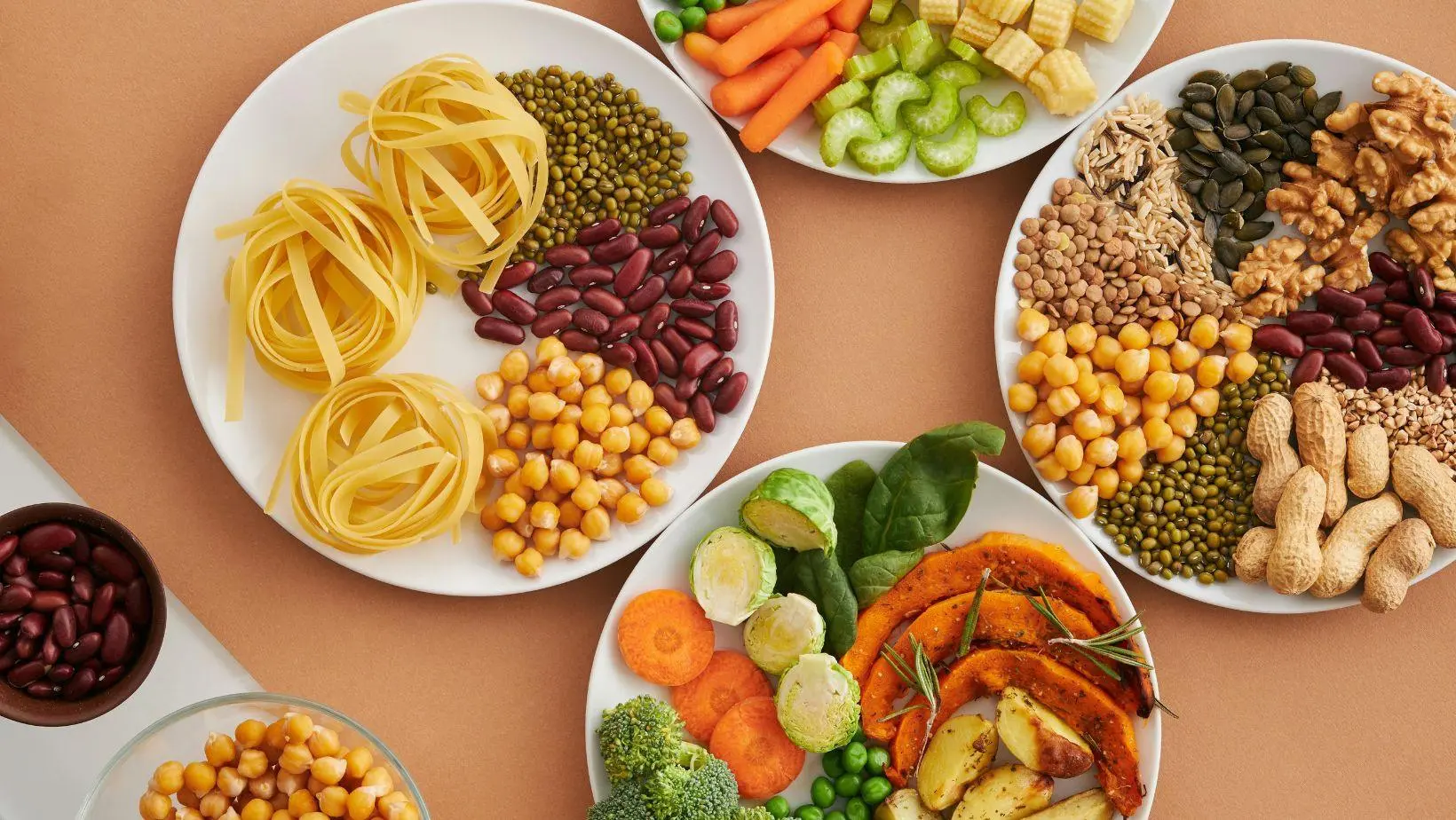

You can absolutely build muscle as a vegetarian. What matters is protein quality and quantity, not meat. Dairy (whey, paneer, milk) and soy score highest for muscle building, tofu is better than its basic score suggests, and pairing dal with grains makes a complete protein. Aim for enough total protein, roughly 1.4 to 2 grams per kg of body weight if you train.
- Can you build muscle on a vegetarian diet?
- Why does protein quality (PDCAAS and DIAAS) matter?
- What are the best vegetarian protein sources?
- How much protein is in common Indian vegetarian foods?
- How much protein do you need to build muscle?
- How do you combine plant proteins to make them complete?
- Are dairy and soy the best vegetarian proteins?
- Do you need a protein powder?
- The bottom line
- Frequently asked questions
- Sources
For vegetarians who lift, the biggest worry is rarely the workout, it is the protein. Can you really pack in enough good-quality protein without meat? The answer is yes, and the science makes the path clear. Building muscle is not about eating meat, it is about choosing proteins your body can actually use, and getting enough of them. Here are the best high-protein vegetarian foods, ranked by quality, plus how much you need.
Can you build muscle on a vegetarian diet?
Yes, comfortably. Muscle growth depends on two things: eating enough total protein, and getting enough of the essential amino acids (especially leucine) that trigger muscle repair. Meat is one way to do that, but dairy, soy, pulses and grains can cover the same bases when chosen well. The two things vegetarians need to watch are protein quality, since some plant proteins are missing certain amino acids, and total quantity, since plant foods are often less protein-dense.
Why does protein quality (PDCAAS and DIAAS) matter?
Your body does not just count grams of protein, it cares how usable that protein is. Two scores measure this. PDCAAS (Protein Digestibility-Corrected Amino Acid Score) rates protein against your amino acid needs and caps at 1.0, the gold standard. DIAAS (Digestible Indispensable Amino Acid Score) is a newer, more accurate measure that can rate high-quality proteins above 1.0 and often gives plant proteins like soy a fairer, higher score than PDCAAS does. Think of it as finding building blocks that fit snugly rather than ones that only look right.
What are the best vegetarian protein sources?
Ranked by protein quality, dairy and soy lead, followed by pulses, with grains lowest. The table below shows approximate PDCAAS values from peer-reviewed research.
| Source | PDCAAS (approx.) | Notes |
|---|---|---|
| Whey protein (milk-derived) | 1.0 | Complete and highly digestible |
| Paneer / cottage cheese | 1.0 | Dairy-based, full amino acid profile |
| Milk | 1.0 | Rich and well absorbed |
| Soy protein (isolate/concentrate) | ~1.0 | Top-tier plant source |
| Soya chunks / flour | ~0.98-1.0 | Reflects soy’s high quality |
| Tofu | ~0.70 (DIAAS ~0.97) | Stronger than its PDCAAS suggests |
| Chickpeas (chana) | ~0.74 | Limited in methionine |
| Kidney beans (rajma) | ~0.65 | Pair with grains |
| Lentils (dal) | ~0.65 | Needs a complementary grain |
| Whole wheat | ~0.40-0.48 | Lysine-limited |
How much protein is in common Indian vegetarian foods?
Quality is only half the story; you also need enough grams. Here is the approximate protein in everyday Indian vegetarian foods, per typical serving.
| Food | Serving | Protein (approx.) |
|---|---|---|
| Soya chunks (dry) | 50 g | 26 g |
| Paneer | 100 g | 18-20 g |
| Cooked chana / rajma | 1 cup | 14-15 g |
| Cooked dal | 1 large katori | 9 g |
| Tofu | 100 g | 8-10 g |
| Hung curd / Greek yogurt | 100 g | 8-10 g |
| Milk | 1 glass (250 ml) | 8 g |
| Peanuts | 30 g | 7-8 g |
How much protein do you need to build muscle?
The ICMR-NIN baseline for an average adult is about 0.83 grams of protein per kg of body weight per day, enough to prevent deficiency but not optimised for muscle gain. For people who train for muscle, sports-nutrition research recommends roughly 1.4 to 2.0 grams per kg per day. For a 70 kg person that is around 100 to 140 grams daily. Spreading it across meals, with 20 to 40 grams of good-quality protein each, helps more than loading it all at once.
How do you combine plant proteins to make them complete?
Individual pulses and grains each miss certain amino acids, but they cover each other’s gaps when eaten together. Pulses are low in methionine and high in lysine; grains are the opposite. Combine them and you get a complete protein. Traditional Indian meals already do this: dal-chawal, rajma-rice, khichdi, and roti with chana all pair a pulse with a grain. You do not need to eat them in the exact same bite, just across the day.
Are dairy and soy the best vegetarian proteins?
For muscle building, yes. Dairy proteins (whey, paneer, milk) are the benchmark: complete, highly digestible and rich in leucine. Soy is the standout plant option, with quality scores that rival whey, making soya chunks, tofu and soy protein excellent vegetarian choices. Tofu deserves special mention: its PDCAAS looks modest at around 0.70, but its DIAAS of about 0.97 shows its real-world value is much higher. Legumes and grains round out the diet and work well when paired.
Do you need a protein powder?
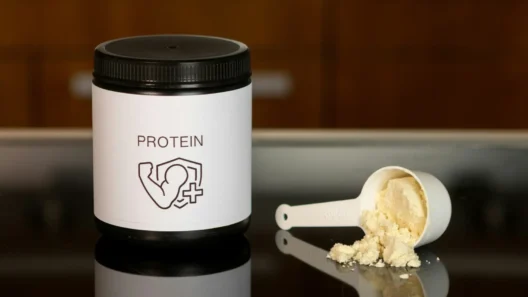
Not necessarily. Most vegetarians can hit their protein target with food, using soya chunks, paneer, dairy and pulse-grain combinations. A powder (whey for lacto-vegetarians, or soy and pea blends for vegans) is simply a convenient way to close a gap on busy or high-training days, not a requirement. If you do use one, quality and label accuracy matter, since many products under-deliver on protein. Unbox Health lab-tests market-bought protein powders at NABL-accredited labs and rates them on label accuracy, safety and nutrition, so you can compare tested plant and whey protein ratings with their full lab reports. Vegetarians balancing several nutrients may also want our guide to omega-3 for vegetarians.
The bottom line
Vegetarians can build muscle just as well as anyone, provided they choose usable protein and enough of it. Lean on dairy and soy for top-quality protein, use tofu and pulse-grain combinations intelligently, and aim for roughly 1.4 to 2 grams of protein per kg of body weight if you train. Food comes first; a lab-verified protein powder is an optional convenience, not a compromise. Your plate becomes a tool, not a limitation.
Frequently asked questions
What is the highest-protein vegetarian food?
By quality and density, soya chunks and paneer lead: 50 g of dry soya chunks gives about 26 g of protein and 100 g of paneer around 18 to 20 g. Soy and dairy also score highest for muscle-building quality.
Is soya as good as whey protein?
Very close. Soy protein has quality scores that rival whey and is the strongest plant-based option. Whey has a slight edge in leucine and speed of absorption, but soy is an excellent choice for vegetarians and vegans.
How much protein do I need per day to build muscle?
Around 1.4 to 2.0 grams per kg of body weight per day if you train, well above the general ICMR baseline of 0.83 g per kg. For a 70 kg person that is roughly 100 to 140 g a day, spread across meals.
Do dal and rice make a complete protein?
Yes. Pulses like dal are low in methionine but high in lysine, and grains like rice are the reverse, so together they provide all the essential amino acids. Classic combinations like dal-chawal, rajma-rice and khichdi are naturally complete.
Is tofu a good protein for muscle building?
Yes. Although tofu's PDCAAS looks modest at about 0.70, its DIAAS of around 0.97 shows its real protein quality is high. It is a versatile, soy-based option that supports muscle building, especially useful for vegans.
Sources
- Indian Council of Medical Research (ICMR-NIN). Nutrient Requirements and Recommended Dietary Allowances for Indians, 2020. National Institute of Nutrition. nin.res.in
- Schaafsma G. The Protein Digestibility-Corrected Amino Acid Score. Journal of Nutrition. 2000;130(7):1865S-1867S.
- Mathai JK, Liu Y, Stein HH. Digestible indispensable amino acid scores (DIAAS) for animal and plant proteins. British Journal of Nutrition. 2017;117(4):490-499. doi.org/10.1017/S0007114517000125
- Jager R, Kerksick CM, Campbell BI, et al. International Society of Sports Nutrition Position Stand: protein and exercise. Journal of the International Society of Sports Nutrition. 2017;14:20. doi.org/10.1186/s12970-017-0177-8
- Unbox Health. Protein Supplements (plant and whey): lab-tested ratings. unboxhealth.in
Reviewed by: Mruga Dholakia, Food Scientist & Nutritionist | Last updated: July 2026