


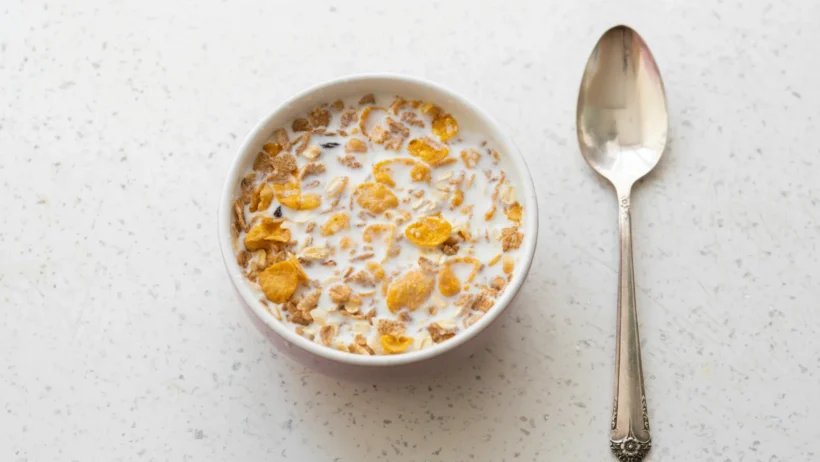

No breakfast cereal is automatically healthy, the label decides. Plain muesli, rolled or steel-cut oats and unsweetened millet cereals are the strongest choices, while many granolas and flavoured flakes hide added sugar. Ignore front-of-pack buzzwords like “high fibre” or “natural” and check the ingredient list and the per-100g sugar figure instead.
- What counts as a breakfast cereal?
- Is muesli healthy?
- Muesli vs granola: which is healthier?
- Which breakfast cereal is the healthiest?
- Which cereal health claims should you ignore?
- How much sugar is hiding in your cereal?
- How do you choose a healthy cereal in India?
- Frequently asked questions
- The bottom line
- Sources
Most of us have stood in the cereal aisle wondering whether a box is actually healthy or just cleverly packaged. Indian shelves now promise “high protein,” “no added sugar” and “superfood blends,” from cornflakes to millet puffs to granola. The truth is that no cereal is healthy or unhealthy by category; it comes down to the ingredients and the sugar. Here is how to read past the buzzwords.
What counts as a breakfast cereal?
Breakfast cereals are grain-based, ready-to-eat or quick-to-prepare foods usually eaten with milk, curd or a plant-based alternative. They are made from corn, wheat, rice, oats or millets and shaped into flakes, puffs, clusters or rolled forms. Many are fortified with vitamins and protein, but fortification does not cancel out a poor base or a heavy dose of sugar. Here is how the main types compare.
| Type | What it is | Watch out for |
|---|---|---|
| Cornflakes / wheat flakes | Crisp, refined-grain flakes | Often low in fibre and high in added sugar; spike blood sugar quickly |
| Rolled / steel-cut oats | Minimally processed whole oats | Plain oats are excellent; flavoured instant oats can be sugary |
| Muesli | Raw oats with dried fruit, nuts and seeds | Nutrient-dense but calorie-dense; sweetened versions add sugar |
| Granola | Oats baked with oil and a sweetener | Often the sugariest and most calorie-dense option |
| Millet mixes | Ragi, bajra, jowar-based cereals | Gut-friendly whole grains; still check for added sugar |
Is muesli healthy?
Muesli can be one of the healthiest cereals, but only the plain, unsweetened kind. At its core muesli is raw oats mixed with nuts, seeds and dried fruit, which gives you fibre, protein and healthy fats with no added sugar. The catch is that many Indian muesli packs add sugar, honey, chocolate or candied fruit, which turns a wholesome base into a dessert. Muesli is also calorie-dense, so portion size matters. Check that the first ingredient is a whole grain and that added sugar is low.
Muesli vs granola: which is healthier?
Muesli is usually the healthier of the two. Both start with oats, nuts and seeds, but granola is baked with added oil and a sweetener like honey or sugar to form crunchy clusters, which pushes up its calories and sugar. Muesli is typically raw and unsweetened, so it tends to be lighter. Granola is not “bad,” but it is closer to a treat, so keep the portion small and compare the labels.
| Feature | Muesli | Granola |
|---|---|---|
| Processing | Raw, unbaked | Baked with oil and sweetener |
| Added sugar | Often none (check the label) | Usually higher |
| Calories | Moderate | Higher (added oil and sugar) |
| Best for | Everyday breakfast | Occasional, small portions |
Which breakfast cereal is the healthiest?
The healthiest everyday cereals are the least processed and lowest in added sugar. Steel-cut and rolled oats top the list, thanks to beta-glucan, a soluble fibre shown to help lower cholesterol and steady blood sugar. Plain muesli and unsweetened millet cereals (ragi, bajra, jowar) come next, adding whole-grain fibre and, for millets, a familiar Indian flavour. Sweetened granola, frosted flakes and chocolate-coated puffs sit at the bottom. Whatever the type, the healthiest option is the one with a whole grain as the first ingredient and little added sugar.
Which cereal health claims should you ignore?
Brands know shoppers scan the front of the pack, so they lean on buzzwords that sound healthy but often are not. Treat these ten as prompts to flip the pack over and read the ingredients, not as proof of quality.
- High fibre: may still be ultra-processed; check the actual fibre per 100g.
- Low fat: often compensated with extra sugar.
- Whole grain: may still contain refined grains; check the order of ingredients.
- Fortified: added vitamins do not fix a sugary, refined base.
- Gluten-free: not healthier unless you are intolerant.
- Natural or organic: says nothing about sugar or sodium.
- Low sugar: watch for artificial sweeteners or hidden carbs.
- Weight-loss friendly: often low in the protein and fibre that keep you full.
- Heart-healthy: usually rests on a single ingredient, not the whole product.
- Energy-boosting: often a cover for fast carbs like maltodextrin.
How much sugar is hiding in your cereal?
Added sugar is the single biggest issue in breakfast cereals. The WHO advises keeping free sugars under 10% of daily calories, and ideally under 5%, which is roughly 25g a day for an average adult. A sweetened cereal or granola can carry 20 to 30g of sugar per 100g, so one bowl can use up most of your daily allowance before you have added anything. Read the per-100g sugar figure, not just the tiny per-serving number, and scan the ingredients for sugar under names like honey, jaggery, malt, glucose syrup and fruit concentrate.
How do you choose a healthy cereal in India?
Ignore the front of the pack and use a short checklist: a whole grain (oats, millet, whole wheat) as the first ingredient; sugar in low single digits per 100g; a decent hit of fibre and protein; and a short, recognisable ingredient list. An FSSAI licence is a baseline, not a quality mark. Because label numbers are not always accurate, independent lab testing tells you the real sugar, protein and safety picture. Unbox Health lab-tests market-bought cereals at NABL-accredited labs and rates them on label accuracy, safety and nutrition, so you can compare tested breakfast cereals with their full lab reports. For another everyday product where the label hides the truth, see how chicory shows up in Indian coffee.
The bottom line
Breakfast cereal is only as healthy as its ingredients. Plain muesli, rolled or steel-cut oats and unsweetened millet cereals are the safest everyday bets, while sugary granola and frosted flakes are closer to treats. Skip the front-of-pack claims, read the ingredient list and the per-100g sugar, and where you can, lean on independent lab data to see what is really in the box.
Frequently asked questions
Is granola healthier than cornflakes?
It can be, because granola usually has more whole grains, nuts and fibre than refined cornflakes. But granola is often higher in sugar and calories, so a smaller portion is key. Compare the per-100g sugar and fibre on both before deciding.
Are cornflakes healthy?
Plain cornflakes are low in fibre and made from refined corn, so they raise blood sugar quickly and are among the less healthy options, especially the sugar-frosted versions. If you enjoy them, add fruit, nuts and milk to slow the sugar spike and boost nutrition.
Are millet cereals a healthy choice?
Yes, when unsweetened. Millets like ragi, bajra and jowar are whole grains with fibre and a lower glycaemic impact than refined flakes, and they suit Indian palates. Millets gained mainstream popularity around 2023, the UN International Year of Millets. As always, check that sugar has not been added to the mix.
How much sugar should a breakfast cereal have?
The lower the better. Aim for cereals with sugar in the low single digits per 100g. The WHO advises keeping free sugars under 10% of daily calories, ideally under 5%, so a single sugary bowl can use up much of that budget. Check the per-100g figure, not the per-serving one.
Does "high protein" cereal actually help?
Sometimes, but the claim can be misleading. Check the actual protein per 100g and whether it comes with a lot of added sugar. A cereal with genuine protein from oats, nuts, seeds or added grains is useful; one that adds a little protein powder to a sugary base is mostly marketing.
Sources
- World Health Organization. Guideline: Sugars intake for adults and children. 2015. who.int
- Indian Council of Medical Research (ICMR-NIN). Dietary Guidelines for Indians. National Institute of Nutrition, 2024. nin.res.in
- European Food Safety Authority (EFSA). Scientific opinion on oat beta-glucan and maintenance of normal blood cholesterol. EFSA Journal. 2010;8(12):1885. efsa.europa.eu
- Food Safety and Standards Authority of India (FSSAI). Labelling and Display Regulations. fssai.gov.in
- Unbox Health. Breakfast Cereals: lab-tested ratings. unboxhealth.in
Reviewed by: UH Editorial Team | Last updated: July 2026