




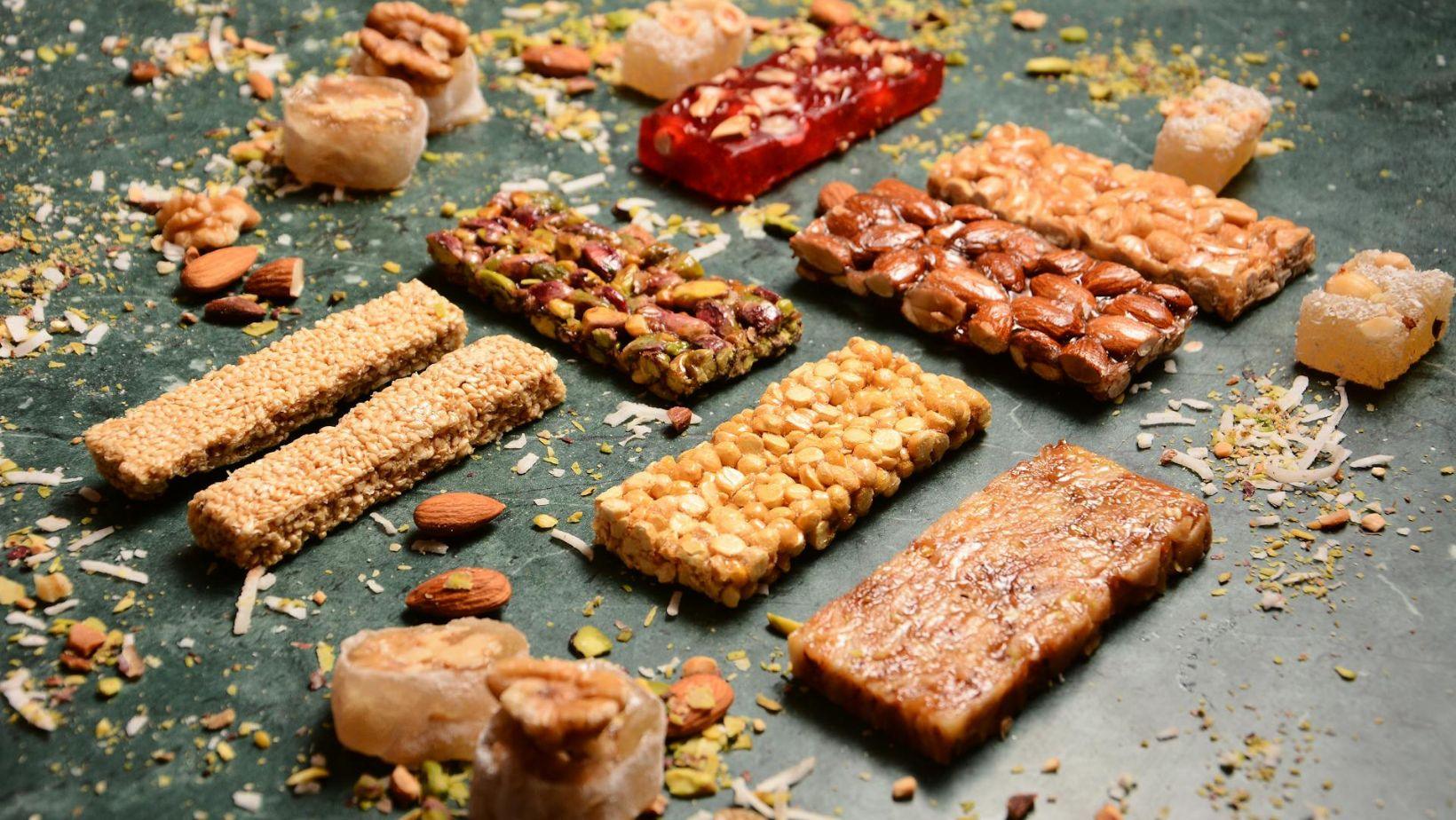

A protein bar is healthy only if the numbers support the name: enough protein per bar, little added sugar, and a protein source that is actually complete. In India, phrases like “high protein” are not marketing language, they are defined conditions in FSSAI’s Schedule I.
- Are protein bars healthy?
- What is the difference between a protein bar and an energy bar?
- What does “high protein” legally mean on an Indian label?
- Why does the type of protein in a bar matter?
- How much sugar is hiding in a protein bar?
- What do the claims on the wrapper actually mean?
- Can a protein bar replace a meal?
- What are the side effects of eating protein bars daily?
- Who actually benefits from a protein bar?
- How do you read a protein bar label in 30 seconds?
- The bottom line
- Frequently asked questions
- Sources
Protein bars and energy bars started as sports nutrition and became everyday snacks. The category now sits in an awkward place: marketed on nutrition, formulated for taste and shelf life. Whether any given bar is a reasonable snack or a chocolate bar with a health halo comes down to what is printed on the back.
India has clearer rules on this than most people realise. Nutrient claims are legally defined, and so is the fine print required when a brand name uses a word like “natural”. Knowing where those lines sit makes the label far easier to read.
Are protein bars healthy?
Some are, most are not especially. A protein bar is a reasonable snack when it delivers a meaningful amount of protein from a complete source with little added sugar. Many bars sold as protein bars deliver modest protein alongside syrups, dates and sugar alcohols, which makes them confectionery with a nutrition claim attached.
The useful comparison is not “bar versus nothing” but “bar versus what you would otherwise eat”. Against a packet of biscuits, a genuine high protein bar is an improvement. Against dal, curd, a boiled egg or a handful of roasted chana, it is usually a more expensive and more processed way to reach the same place.
Context matters too. ICMR-NIN’s 2020 requirements put the adult protein RDA at 0.83 g per kg of body weight, which works out to 54.0 g a day for a 65 kg man and 45.7 g for a 55 kg woman. Anyone already eating dal, dairy and eggs regularly may not need the extra protein at all.
What is the difference between a protein bar and an energy bar?
A protein bar is formulated to deliver protein for satiety and muscle repair, typically 10 to 20 g a bar. An energy bar is formulated to deliver quick carbohydrate for fuel, so oats, dried fruit and syrups dominate and protein is incidental. Neither name is a legal food category in India.
| Protein bar | Energy bar | |
|---|---|---|
| Primary purpose | Protein delivery, satiety, muscle repair | Rapid carbohydrate fuel |
| Dominant ingredients | Whey, casein, soy or pea protein isolate, nuts | Oats, dates, dried fruit, syrups, nuts |
| Typical protein per bar | 10 to 20 g | Usually under 10 g |
| Best used | Between meals, after resistance training | Before or during endurance activity |
| Common failure mode | Protein from incomplete sources, sugar alcohols | Sold as a health food when it is a sugar source |
| Legal category in India | None, both are proprietary foods | None, both are proprietary foods |
Because neither term is defined in law, the words on the front tell you the manufacturer’s intent, not the composition. The nutrition panel is the only reliable way to tell the two apart, and plenty of products sit in between.
What does “high protein” legally mean on an Indian label?
It is a regulated claim, not a marketing phrase. Nutrient content claims such as “high protein”, “rich in protein” and “source of protein” carry defined conditions in Schedule I of the Food Safety and Standards (Advertising and Claims) Regulations, 2018, amended by the Second Amendment Regulations gazetted in December 2022.
The practical consequence is that a brand cannot print “high protein” unless the product meets the Schedule I condition for that claim. The same regulation covers comparative claims: a bar claiming to contain as much protein as some reference food must have enough of the nutrient to qualify that reference food as a “source” in the first place.
Where the regulation stops short is protein quality. Schedule I governs how much, not how good, so a bar meeting the threshold with collagen scores the same on the claim as one meeting it with whey. That gap is why the ingredient list matters more than the front of the pack.
Why does the type of protein in a bar matter?
Protein quality describes how well a source supplies the nine indispensable amino acids in digestible form. ICMR-NIN’s 2020 report adopted DIAAS, the digestible indispensable amino acid score, in place of the older PDCAAS, because DIAAS measures digestibility at the end of the small intestine rather than in faeces.
| Protein source in bars | Complete protein? | What to know |
|---|---|---|
| Whey protein isolate or concentrate | Yes | Highest quality tier; also the most expensive, so amounts are often modest |
| Milk protein and casein | Yes | Comparable quality to whey, slower digesting |
| Soy protein isolate | Yes | The strongest plant option on amino acid profile |
| Pea protein | Nearly, low in methionine | Usually blended with rice or another grain protein to close the gap |
| Collagen or gelatin | No | Lacks tryptophan entirely, yet still counts toward the total protein figure on the pack |
| Nut and seed protein | Varies | Comes with useful fat and fibre, but the protein figure is usually small |
The collagen row is the one worth remembering. Collagen is an incomplete protein, but the total protein number on a nutrition panel is derived from nitrogen content, so collagen raises the printed figure without contributing the same amino acids. Its position in the ingredient list tells you how much of the claim it carries.
How much sugar is hiding in a protein bar?
More than most labels suggest at a glance, because sweetness arrives under many names. WHO recommends keeping free sugars below 10% of total energy intake, with a conditional further reduction to below 5%. Free sugars include not just table sugar but honey, syrups and fruit juice concentrates.
That definition matters for bars specifically. Date paste, invert syrup, glucose syrup, honey and fruit juice concentrate all count as free sugars under the WHO definition, even when the wrapper describes them as natural. A bar sweetened entirely with dates is still contributing free sugars.
Sugar alcohols such as maltitol, sorbitol and erythritol are the other route. They lower the sugar figure on the panel without lowering sweetness, which is why “no added sugar” bars can still taste like dessert. They also account for most of the digestive complaints in this category.
What do the claims on the wrapper actually mean?
Less than they imply, and India’s rules make that unusually visible. Under the FSS (Advertising and Claims) Regulations, 2018, if a brand name uses words such as “natural”, “fresh”, “pure”, “original”, “traditional”, “authentic”, “genuine” or “real”, the label must carry a disclaimer stating that this is only a brand name and does not represent its true nature.
The regulation even fixes the size of that fine print: not under 1.5 mm where the principal display panel is under 100 cm sq, not under 2 mm between 100 and 200 cm sq, and not under 3 mm above 200 cm sq. Finding that disclaimer on a pack is a quick way to see which words are decoration.
Endorsements are covered separately. The Advertising Standards Council of India’s code requires health and nutrition claims to be supported by appropriate scientific evidence, and states that claims in advertisements should not be inconsistent with the information on the label. A fitness influencer’s enthusiasm is not evidence under either framework.
Can a protein bar replace a meal?
Not unless it is formulated and labelled as a meal replacement. The ASCI code is explicit: advertisements for food or beverages should not promote or portray the product as a meal replacement unless it is nutritionally designed as such. Most bars are snacks, and are regulated and formulated as snacks.
The gap is micronutrients and variety rather than calories. A bar can match a light meal on energy while missing most of the vitamins, minerals and fibre range a mixed Indian meal provides. Pairing a bar with fruit, curd or milk closes part of that gap cheaply.
What are the side effects of eating protein bars daily?
The reported effects are digestive rather than serious: bloating, gas, cramping and loose stools. Three ingredients explain most of it, and all three are common in this category. Individual tolerance varies widely, so the same bar can be fine for one person and uncomfortable for another.
Sugar alcohols are the usual cause. Maltitol and sorbitol are incompletely absorbed and ferment in the large intestine, which produces gas and can draw water into the bowel. Added inulin or chicory root fibre does the same. A large fibre dose in a single sitting is the third route, independent of the ingredient used.
For healthy adults with normal kidney function, there is no evidence that a daily bar creates a protein problem, and ICMR-NIN sets no tolerable upper limit for protein. Anyone with chronic kidney disease, reduced kidney function, or a history of kidney stones should set total protein intake with a doctor rather than following general advice.
The more common practical issue is displacement. A bar eaten in addition to normal meals adds energy; a bar eaten instead of a meal removes variety. Neither is dangerous, but both change the diet in ways the wrapper does not mention.
Who actually benefits from a protein bar?
People for whom convenience is the binding constraint. That includes anyone training regularly who cannot get a meal in after a session, long commutes and travel where the alternative is fried or sugary, and appetites too small to hit a protein target from food alone, which is common in older adults and during recovery from illness.
Vegetarians can also find bars useful, since plant-based Indian diets tend to run short on protein quality rather than quantity. A soy or blended plant protein bar contributes a more complete amino acid profile than most cereal snacks. The list of high protein vegetarian foods covers cheaper routes to the same result.
Who does not need one: anyone already meeting the requirement through dal, dairy, eggs, fish or meat. The daily protein requirement for Indian adults is a more useful starting point than any product claim.
How do you read a protein bar label in 30 seconds?
Ignore the front of the pack and check five things on the back, in this order: protein per bar, protein source, added sugar, sugar alcohols and fibre, and total energy. That sequence answers whether the bar delivers what its name claims faster than any front-of-pack graphic will.
| Check | Where to look | What it tells you |
|---|---|---|
| Protein per bar | Nutrition panel, per serving column | The per 100 g figure flatters a 40 g bar; per bar is the number you eat |
| Protein source | Ingredient list, in order | Whey, milk or soy high up is a good sign; collagen or gelatin is not |
| Added sugar | Nutrition panel and ingredient list | Count syrups, honey, date paste and juice concentrate as free sugars |
| Sugar alcohols and fibre | Ingredient list | Maltitol, sorbitol, inulin and chicory root explain most digestive complaints |
| Brand-name disclaimer | Fine print near the brand name | Its presence means a word like “natural” or “real” is decoration, not description |
Unbox Health is India’s independent supplement and food testing platform, using NABL-accredited labs to verify products with no brand involvement. Lab-tested ratings and full reports for protein bars sold in India are published in full, including label accuracy results.
The bottom line
“Protein bar” and “energy bar” are marketing categories, not legal ones, so the name tells you intent rather than composition. What is regulated is the claim: “high protein” has to meet a Schedule I condition, and a brand name using “natural” or “real” has to carry a disclaimer in a specified font size.
Judge a bar on protein per bar, protein source and added sugar, and judge it against what it replaces rather than against nothing. For most people meeting the ICMR-NIN requirement through everyday food, a bar is a convenience purchase, which is a perfectly reasonable thing to buy as long as it is not mistaken for a nutritional necessity.
Frequently asked questions
What is the difference between a protein bar and an energy bar?
A protein bar is formulated to deliver protein, usually 10 to 20 g a bar, for satiety and muscle repair. An energy bar is formulated to deliver quick carbohydrate, so oats, dried fruit and syrups dominate and protein is incidental. The names describe intended purpose, not a legal category.
How much protein makes a bar high protein in India?
FSSAI does not leave this to marketing. Nutrient content claims such as high protein and source of protein have defined conditions in Schedule I of the Food Safety and Standards (Advertising and Claims) Regulations, 2018, as amended in 2022. A brand cannot use the phrase unless the product meets those conditions.
Do protein bars cause side effects?
The common complaints are digestive rather than serious: bloating, gas and loose stools. These usually trace to sugar alcohols such as maltitol and sorbitol, to added inulin or chicory root fibre, or simply to a large fibre dose in one sitting. Individual tolerance varies widely.
Can a protein bar replace a meal?
Not unless it is formulated and labelled as a meal replacement. The Advertising Standards Council of India's code states that food advertisements should not portray a product as a meal replacement unless it is nutritionally designed as one. A bar typically lacks the micronutrient range of a meal.
Is the protein in a bar as good as the protein in food?
It depends on the source. Whey and milk proteins score well on the digestible indispensable amino acid score, the quality measure ICMR-NIN adopted in 2020. Collagen and gelatin are incomplete proteins and score poorly, yet they still count toward the total protein figure printed on the pack.
Are protein bars good for weight loss?
Protein is more satiating than carbohydrate or fat, so a bar can displace a less filling snack. But bars are energy dense, and eating one in addition to normal meals adds calories rather than replacing them. Whether a bar helps depends entirely on what it replaces.
Do you need a protein bar if you already meet your protein target?
Probably not for protein's sake. ICMR-NIN's adult RDA is 0.83 g per kg of body weight, which is 54.0 g a day for a 65 kg man and 45.7 g for a 55 kg woman. Anyone eating dal, dairy and eggs regularly is often near that already.
Sources
- Food Safety and Standards Authority of India (2018, amended 2022). Food Safety and Standards (Advertising and Claims) Regulations, including Schedule I nutrient content claims and Schedule V use of certain words. fssai.gov.in
- Indian Council of Medical Research, National Institute of Nutrition (2020). Nutrient Requirements for Indians: Recommended Dietary Allowances and Estimated Average Requirements. ICMR-NIN, Hyderabad. nin.res.in
- World Health Organization (2015). Guideline: Sugars Intake for Adults and Children. WHO, Geneva. who.int
- Advertising Standards Council of India. Code for Self-Regulation of Advertising Content in India, including guidelines for advertising of food and beverages. ascionline.in
Reviewed by: Unbox Health Editorial Team | Last updated: August 2026