



Around 53% of Indians test deficient in vitamin B12, among the highest rates recorded anywhere. The reason is mostly dietary: B12 occurs naturally only in animal foods, and 81% of Indian adults restrict meat. ICMR-NIN sets the adult requirement at 2.2 micrograms a day.
- How common is vitamin B12 deficiency in India?
- How much vitamin B12 do Indians actually need?
- Why are Indian vegetarians at higher risk?
- Which foods actually contain vitamin B12?
- What causes B12 deficiency besides diet?
- What are the symptoms of low vitamin B12?
- How is vitamin B12 deficiency treated?
- What should you look for in a vitamin B12 supplement?
- How much vitamin B12 is too much?
- The bottom line
- Frequently asked questions
- Sources
How common is vitamin B12 deficiency in India?
A 2021 systematic review and meta-analysis pooling 26 Indian studies put the overall prevalence of vitamin B12 deficiency at 53%, with a confidence interval of 41% to 64%. Deficiency was slightly more common in under-18s at 57% than in adults over 18 at 48%. Roughly one in two Indians is affected.
Clinical data points the same way. In a north Indian cohort reported by Singla and colleagues in 2019, 47% of people tested had serum B12 below 200 pg/ml. The authors described the deficiency as endemic in the Indian population, a word rarely used for a nutrient gap.
Two things make this worse than the headline number suggests. Blood tests catch overt deficiency, so people with mild or subclinical depletion are not counted. And because the body holds a large reserve, blood levels can fall for years before anything feels wrong.
How much vitamin B12 do Indians actually need?
ICMR-NIN 2020 sets the Recommended Dietary Allowance for vitamin B12 at 2.2 micrograms a day for Indian adults, men and women alike, with an Estimated Average Requirement of 2.0 micrograms. That is more than double the 2010 Indian figure of 1.0 microgram, revised upward on newer absorption and turnover data.
| Group | ICMR-NIN 2020 RDA | ICMR-NIN 2020 EAR |
|---|---|---|
| Adult men | 2.2 mcg/day | 2.0 mcg/day |
| Adult women | 2.2 mcg/day | 2.0 mcg/day |
| Pregnant women | 2.45 mcg/day | Not specified |
| Lactating women | 3.2 mcg/day | Not specified |
| Children 7 years and above | 2.2 mcg/day | 2.0 mcg/day |
| Earlier Indian standard (ICMR 2010) | 1.0 mcg/day | Not derived |
| US reference (IOM) | 2.4 mcg/day | 2.0 mcg/day |
ICMR-NIN advises using the EAR, not the RDA, for planning individual diets and judging whether a population is getting enough. The RDA sits at the upper end of the requirement range, so treating it as an average target overstates what most people need.
These are small amounts. The problem is not quantity, it is source. B12 is made by bacteria, not plants, so a diet built on grains, pulses, vegetables and fruit supplies almost none of it regardless of how much you eat.
Why are Indian vegetarians at higher risk?
Because vitamin B12 is absent from plant foods. Pew Research Center surveyed 29,999 Indian adults in 2021 and found 81% restrict meat in some way, while 39% identify as vegetarian. That leaves dairy and fortified products as the only routine dietary sources for a large share of the country.
The most direct Indian evidence comes from Naik, Mahalle and Bhide, who measured B12 biomarkers in 119 young, healthy, unsupplemented vegetarian graduates in Pune. Half were B12 deficient. Between 50% and 70% had low holotranscobalamin, the bioactive fraction that reflects recent intake, and 70% to 90% had elevated homocysteine.
Note who those subjects were: young and apparently healthy. If half of that group is deficient, age and illness are not the drivers. Diet is. Lacto-vegetarians who eat curd, paneer and milk daily get some B12, but rarely enough to cover the requirement on its own.
The same pattern shows up in other nutrients that Indian vegetarian diets supply poorly. Our guide to omega-3 deficiency among Indian vegetarians covers a nutrient with the same structural problem: the useful forms sit mainly in animal foods.
Which foods actually contain vitamin B12?
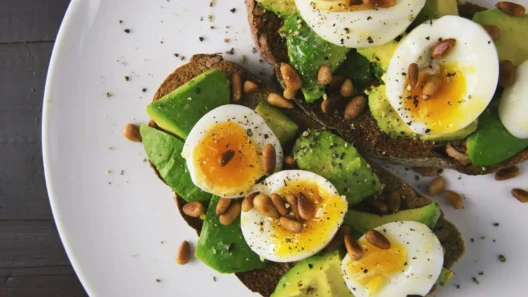
Only animal foods and fortified products. Organ meats, especially liver, are the richest natural sources, followed by fish, eggs, meat and dairy. Plant foods contain no meaningful vitamin B12 unless it has been added during manufacturing, which is what fortification means on a label.
| Food group | Vitamin B12 content | What this means in an Indian diet |
|---|---|---|
| Organ meats, especially liver | Very high | Richest natural source, eaten rarely in most households |
| Fish and shellfish | High | Reliable source in coastal and eastern diets |
| Eggs and meat | Moderate | Covers requirements with regular intake |
| Milk, curd, paneer | Low to moderate | Main source for lacto-vegetarians, usually not sufficient alone |
| Fortified foods, some cereals and juices | Varies, check the label | Fewer fortified options in India than in the US or UK |
| Grains, pulses, vegetables, fruit | Negligible | Contribute effectively nothing |
| Nuts and dried fruit | Negligible | Widely claimed online to be high in B12, they are not |
The claim that almonds, pistachios and other dry fruits are high in vitamin B12 circulates widely on Indian social media and is simply false. For reliable numbers, check the USDA FoodData Central database or ICMR-NIN’s own Indian Food Composition Tables rather than a nutrition post.
What causes B12 deficiency besides diet?
Absorption failure and certain medicines. Vitamin B12 in food is bound to protein and needs stomach acid plus intrinsic factor, a protein made by gastric parietal cells, to be absorbed in the small intestine. Break any link in that chain and diet stops mattering.
Four situations account for most non-dietary cases. Autoimmune destruction of intrinsic factor production, which causes pernicious anaemia. Surgery that removes or bypasses part of the stomach or ileum. Chronic gastrointestinal disease. And ageing, which reduces gastric acid secretion and makes food-bound B12 harder to release.
Medication is the cause most often missed. The US National Institutes of Health documents that metformin, proton pump inhibitors such as omeprazole, and H2 receptor antagonists all reduce vitamin B12 absorption. Metformin matters most in India, given how widely it is prescribed for type 2 diabetes and how long people stay on it.
If you take any of these long term, B12 status is worth monitoring rather than assuming. The interaction is well established, but it does not affect everyone, and the fix is straightforward once it is identified.
What are the symptoms of low vitamin B12?
Fatigue and low energy come first, then anaemia, then nerve symptoms such as tingling, numbness or pins and needles in the hands and feet. Because B12 is needed for red blood cell formation, nerve maintenance and DNA synthesis, the early signs are vague and easy to attribute to something else.
The important distinction is between what B12 correction reliably does and what it is merely associated with. Indian cohort studies repeatedly link low B12 to cardiovascular disease and stroke risk, largely through raised homocysteine. Association is not the same as a demonstrated benefit from fixing it.
| Claim | Best available evidence | Tested in humans? | How settled |
|---|---|---|---|
| Corrects anaemia caused by B12 deficiency | Clinical treatment data, established mechanism | Yes | Settled |
| Prevents or reverses deficiency-related nerve damage | Human clinical series, including Indian infant case series | Yes | Well supported, depends on how early it is caught |
| Lowers blood homocysteine | Human trials and Indian observational cohorts | Yes | Settled for the biomarker itself |
| Correcting B12 prevents heart attack or stroke | Consistent association in Indian cohorts, no demonstrated benefit from correction | Observational only | Not established |
| Boosts energy in people who are not deficient | Little supporting evidence | Yes | Not supported |
| Slows ageing | No adequate human evidence | No | Not supported |
Pregnancy deserves separate mention. Low maternal B12 is linked to pregnancy complications and to neurological problems in infants, documented in Indian case series. This is one setting where testing and correcting a deficiency is not optional, and it should be handled by a doctor.
How is vitamin B12 deficiency treated?
With oral supplements in most cases, or injections when absorption is the problem. B12 deficiency is one of the easier nutrient gaps to correct, because high oral doses can be absorbed by a passive route that does not need intrinsic factor. Treatment is cheap and widely available.
Diet alone rarely fixes an established deficiency. A lacto-vegetarian can raise intake by eating more milk, curd and paneer, and that helps maintain status, but it is usually too slow and too small to reverse a diagnosed deficiency. Fortified foods help where they are available.
Total body stores run to roughly 2 to 3 milligrams in healthy adults and turn over slowly, which is why deficiency takes years to develop. The same reserve means that once levels are restored, maintenance intake can be modest. A doctor should set the dose and retest, particularly if the cause is malabsorption rather than diet.
What should you look for in a vitamin B12 supplement?
Check four things on the label: the chemical form, the declared dose, whether the source suits a vegetarian diet, and whether the brand publishes third-party lab results. Indian B12 products range from around 1 microgram to 1,500 micrograms per serving, a difference of three orders of magnitude.
Form first. Methylcobalamin and cyanocobalamin are the two common forms in the Indian market. Both raise B12 status. Methylcobalamin is often marketed as superior, but for correcting an ordinary dietary deficiency the practical difference is small, and dose and consistency matter more than form.
Dose next. A 1 microgram tablet will not correct a deficiency, and a 1,500 microgram tablet is far above the requirement. Neither is automatically wrong, they answer different questions, so match the dose to whether you are maintaining status or treating a diagnosed shortfall.
Source matters if you are vegetarian. Bacterial fermentation derived B12 is suitable for plant-based diets, but capsule shells are frequently gelatin. The claim on the front of the pack and the excipient list on the back do not always agree.
Label accuracy is the gap independent testing exists to close. Unbox Health is India’s independent supplement and food testing platform, using NABL-accredited labs to verify products with no brand involvement. You can see how individual products performed on our lab-tested vitamin B12 supplement ratings, including full reports.
How much vitamin B12 is too much?
Vitamin B12 has no established upper limit because it is water soluble and excess is excreted rather than stored indefinitely. High intakes from food and supplements have not been shown to cause harm in healthy people. That is not a reason to take large doses without a reason.
Two cautions apply. Anyone on metformin, a proton pump inhibitor or an H2 blocker should have B12 status checked rather than self-dosing, because the underlying issue is absorption. And unexplained fatigue, tingling or anaemia needs a diagnosis, not a supplement bought on a guess.
Total serum B12 is also an imperfect test. Naik and colleagues showed that serum B12 alone does not reliably reflect status, and that holotranscobalamin and homocysteine add information. If symptoms persist despite a normal serum result, that is worth raising with your doctor.
Pregnant and lactating women, older adults, people on long-term acid-suppressing medication and anyone who has had gastric or intestinal surgery should treat B12 as a medical question rather than a self-managed one.
The bottom line
Vitamin B12 deficiency affects roughly half of India, and the cause is structural rather than individual. A largely plant-based national diet, few fortified foods and low awareness combine to produce deficiency rates that would be treated as a public health emergency for most other nutrients.
The practical takeaways are narrow and clear. Adults need 2.2 micrograms a day per ICMR-NIN 2020. Plant foods supply none of it. Dairy helps but rarely suffices. If you are vegetarian, over 60, pregnant, or on metformin or acid-suppressing medication, get tested rather than guessing.
And when a supplement is the answer, the label is the variable you can actually control. Check the form, the dose, the vegetarian status and whether anyone independent has verified what is inside.
Frequently asked questions
How much vitamin B12 do Indian adults need per day?
ICMR-NIN 2020 sets the Recommended Dietary Allowance at 2.2 micrograms a day for adult men and women, with an Estimated Average Requirement of 2.0 micrograms. Pregnant women need 2.45 micrograms and lactating women 3.2 micrograms. This replaced the older 2010 Indian figure of 1.0 microgram a day.
Can vegetarians get enough vitamin B12 from an Indian diet?
Rarely from plant foods alone, because vitamin B12 is absent from grains, pulses, vegetables and fruit. Lacto-vegetarians who eat milk, curd and paneer daily get some, but usually not enough to cover the requirement. In one Pune study of 119 young healthy vegetarians, half were deficient despite being otherwise well.
Do almonds and dry fruits contain vitamin B12?
No. This claim circulates widely on Indian social media and is false. Vitamin B12 is produced by bacteria and accumulates in animal tissue, so nuts and dried fruit contain negligible amounts. For reliable values, check USDA FoodData Central or ICMR-NIN Indian Food Composition Tables rather than a nutrition post.
Does metformin cause vitamin B12 deficiency?
Metformin reduces vitamin B12 absorption, an interaction documented by the US National Institutes of Health. Proton pump inhibitors such as omeprazole and H2 receptor antagonists do the same by reducing gastric acid. It does not affect everyone, but anyone on these medicines long term should have B12 status checked rather than assumed.
What are the early symptoms of low vitamin B12?
Fatigue and reduced energy usually come first, followed by anaemia and then nerve symptoms such as tingling, numbness or pins and needles in the hands and feet. Early signs are vague and easily attributed to something else, which is part of why deficiency goes undetected for so long in India.
Is methylcobalamin better than cyanocobalamin?
Both forms raise vitamin B12 status effectively. Methylcobalamin is often marketed as superior, but for correcting an ordinary dietary deficiency the practical difference is small. Dose and consistency matter considerably more than form. Choose based on the declared dose and whether the product has been independently tested for label accuracy.
Can you take too much vitamin B12?
Vitamin B12 has no established tolerable upper limit because it is water soluble and excess is excreted. High intakes have not been shown to harm healthy people. That said, large doses are not a substitute for a diagnosis: unexplained fatigue, tingling or anaemia should be investigated by a doctor first.
Sources
- Indian Council of Medical Research, National Institute of Nutrition. Nutrient Requirements for Indians: Recommended Dietary Allowances (RDA) and Estimated Average Requirements (EAR), 2020. Hyderabad: ICMR-NIN; 2020. Available from: https://www.nin.res.in/rdabook/brief_note.pdf
- Venkatesh U, Sharma A, Ananthan VA, Subbiah P, Durga R. Micronutrient’s deficiency in India: a systematic review and meta-analysis. Journal of Nutritional Science. 2021;10:e110. Available from: https://doi.org/10.1017/jns.2021.102
- Naik S, Mahalle N, Bhide V. Identification of vitamin B12 deficiency in vegetarian Indians. British Journal of Nutrition. 2018;119(6):629-635. Available from: https://pubmed.ncbi.nlm.nih.gov/29446340/
- Singla R, Garg A, Surana V, et al. Vitamin B12 Deficiency is Endemic in Indian Population: A Perspective from North India. Indian Journal of Endocrinology and Metabolism. 2019;23(2):211-214. Available from: https://journals.lww.com/indjem/fulltext/2019/23020/vitamin_b12_deficiency_is_endemic_in_indian.8.aspx
- National Institutes of Health, Office of Dietary Supplements. Vitamin B12: Fact Sheet for Health Professionals. Bethesda: US Department of Health and Human Services. Available from: https://ods.od.nih.gov/factsheets/VitaminB12-HealthProfessional/
- Pew Research Center. Eight-in-ten Indians limit meat in their diets, and four-in-ten consider themselves vegetarian. 2021. Available from: https://www.pewresearch.org/short-reads/2021/07/08/eight-in-ten-indians-limit-meat-in-their-diets-and-four-in-ten-consider-themselves-vegetarian/
Reviewed by: Unbox Health Editorial Team, Food Scientists & Nutritionists | Last updated: July 2026