




After 60, lower stomach acid, thinner skin, and common medications reduce how well the body absorbs vitamin B12, calcium, and vitamin D, even on a good diet. ICMR-NIN 2020 sets the Indian RDA at 2.2 mcg/day for B12, 1,000 mg/day for calcium, and 600 IU/day for vitamin D. Most Indian seniors benefit more from correcting a confirmed gap through testing than from a general multivitamin, and routine iron supplementation is not recommended unless deficiency is confirmed.
- Why Do Nutrient Needs Change After 60?
- How Much Vitamin B12 Do Indian Seniors Need?
- How Much Calcium and Vitamin D Should You Take After 60?
- Do You Need a Magnesium Supplement as You Age?
- Is Omega-3 Worth Taking for Heart and Joint Health After 60?
- How Much Protein Do Older Adults Actually Need?
- Is CoQ10 Necessary If You Are on Statins?
- What Does the Evidence Actually Support?
- What Do FSSAI Rules Say About Health Supplements?
- Safety: What to Check Before Starting Any Supplement
- The Bottom Line
- Frequently Asked Questions
- Sources
Why Do Nutrient Needs Change After 60?
Nutrient needs change after 60 mainly because of reduced stomach acid, thinner and less sun-responsive skin, smaller appetites, and long-term medications, all of which lower how much of a nutrient the body actually absorbs and retains, even when food intake looks adequate. Atrophic gastritis, which affects a meaningful share of older adults, cuts intrinsic factor and stomach acid, both needed to release vitamin B12 from food. Skin becomes less efficient at making vitamin D from sunlight. Kidneys activate vitamin D less efficiently. Medications like metformin, proton pump inhibitors, and long-term diuretics can each deplete specific nutrients over months of use.
This is a shift in absorption and requirement, not a rule that every senior needs every supplement. A blood test for the nutrients most commonly affected (B12, vitamin D, and, where relevant, iron and folate) is the starting point, not a multivitamin bought off a pharmacy shelf.
How Much Vitamin B12 Do Indian Seniors Need?
Indian seniors need at least 2.2 mcg of vitamin B12 a day, the ICMR-NIN 2020 RDA for adults, but many need considerably more from a supplement because ageing reduces how much dietary B12 the body can absorb, not because the requirement itself rises sharply. Atrophic gastritis and reduced intrinsic factor mean less B12 is released from meat, egg, and dairy protein even when intake is normal, which is why oral doses used for correction (500 to 1,000 mcg/day of cyanocobalamin or methylcobalamin) are far higher than the RDA: most of that dose is lost, and only a small, absorption-independent fraction gets through passively.
India has one of the highest reported rates of vitamin B12 deficiency globally, compounded in vegetarians by the near-absence of B12 in plant foods. Anyone on metformin or long-term acid-suppressing drugs (PPIs or H2 blockers) should get B12 checked periodically, since both drug classes are independently linked to lower B12 levels over time.
How Much Calcium and Vitamin D Should You Take After 60?
The ICMR-NIN 2020 RDA is 1,000 mg/day of calcium and 600 IU (15 mcg)/day of vitamin D for adults, from food and supplements combined, though several international bodies set higher calcium targets specifically for postmenopausal women and older men. Bone loss accelerates after menopause and continues gradually in older men, and vitamin D is what allows the gut to absorb the calcium in the first place, so the two are typically discussed together rather than as separate decisions.
A randomised trial in JAMA (Bischoff-Ferrari et al., 2005) found that combined calcium and vitamin D supplementation reduced fracture risk in older adults, while vitamin D alone without calcium showed a weaker and less consistent effect, which is why the two nutrients are paired in fracture-prevention guidance rather than dosed independently. If supplementing calcium beyond diet, splitting the dose to 500 mg or less at a time improves absorption, and intakes well above requirement have been associated with a higher risk of kidney stones in some studies, so more is not automatically better.
| Nutrient | ICMR-NIN 2020 RDA (adults) | Typical supplemental range used for correction |
|---|---|---|
| Vitamin B12 | 2.2 mcg/day | 500-1,000 mcg/day oral, for confirmed deficiency |
| Calcium | 1,000 mg/day (men and women) | Individualised; split into doses of 500 mg or less |
| Vitamin D | 600 IU / 15 mcg/day | 800-1,000 IU/day common maintenance dose; higher for correction under medical guidance |
| Magnesium | 440 mg/day (men), 370 mg/day (women) | 100-350 mg/day elemental, from food plus supplement |
| Protein | 0.83 g/kg/day (general adult RDA) | 1.0-1.2 g/kg/day suggested for older adults by PROT-AGE (2013) |
Do You Need a Magnesium Supplement as You Age?
Many older adults fall short of the ICMR-NIN 2020 magnesium RDA of 440 mg/day for men and 370 mg/day for women, partly because magnesium-rich foods like nuts, seeds, and whole grains make up a smaller share of typical diets and partly because diuretics and proton pump inhibitors increase magnesium loss. Magnesium supports muscle relaxation, nerve conduction, glucose handling, and bone mineral quality, so a shortfall can show up as cramps, poor sleep, or blood sugar swings, though these symptoms have many other causes and are not proof of magnesium deficiency on their own.
Where supplementation is used, 100 to 350 mg/day of elemental magnesium from citrate or glycinate forms, on top of dietary intake, is a commonly cited maintenance range, kept within the combined RDA rather than treated as an add-on megadose. Anyone with reduced kidney function should not supplement magnesium without medical supervision, since impaired kidneys cannot clear excess magnesium efficiently.
Is Omega-3 Worth Taking for Heart and Joint Health After 60?
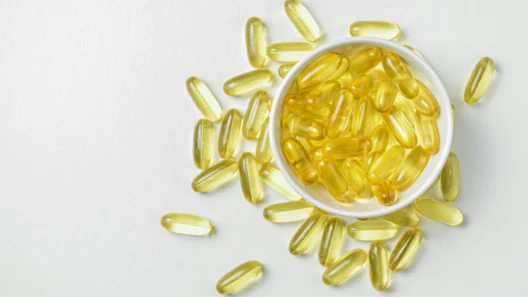
Omega-3 fatty acids (EPA and DHA) are worth considering for seniors mainly for triglyceride control and general cardiovascular support, with joint-comfort and cognitive benefits still less consistently established across trials. ICMR-NIN’s dietary target for essential fatty acids is 2.2 g/day of ALA (plant-based omega-3) as part of overall fat intake; EPA and DHA specifically do not have a separate ICMR RDA, so dosing recommendations for supplements come mainly from clinical trial ranges rather than a national reference value.
Commonly used supplemental ranges are 250 to 500 mg/day combined EPA+DHA for general health, up to around 1,000 mg/day where cardiovascular support is the goal, and higher prescription-strength doses (2 to 4 g/day) only under medical supervision for confirmed high triglycerides. Fish oil at higher doses can mildly increase bleeding risk, which matters for anyone on blood thinners or awaiting surgery.
How Much Protein Do Older Adults Actually Need?
Older adults likely need more protein than the general adult RDA of 0.83 g/kg/day to counter age-related muscle loss (sarcopenia): the PROT-AGE Study Group’s 2013 position paper, endorsed by several geriatric nutrition societies, recommends 1.0 to 1.2 g/kg/day for healthy older adults, rising to 1.2 to 1.5 g/kg/day for those managing acute or chronic illness. ICMR-NIN’s own footnote for people on a cereal-heavy, lower-quality-protein diet already raises the requirement to 1 g/kg/day, which lines up with the direction, if not the exact figure, of the PROT-AGE recommendation.
In practical terms, this means an older adult weighing 65 kg should generally aim for roughly 65 to 78 g of protein a day, spread across meals rather than concentrated at dinner, since muscle protein synthesis in older adults responds better to protein spread through the day than to one large serving. Dals, curd, paneer, eggs, and fish are the more accessible ways to close this gap in an Indian diet; a protein supplement is a convenience option for people who cannot reliably meet the target through food, not a requirement in itself.
Is CoQ10 Necessary If You Are on Statins?
CoQ10 is not a required supplement for everyone on statins, but it is one of the more plausible add-ons for people who experience statin-associated muscle symptoms, since statins reduce the body’s own CoQ10 production through the same pathway they use to lower cholesterol. Evidence for CoQ10 easing statin-related muscle pain is mixed across trials rather than settled, so it is reasonable to try under medical guidance rather than something everyone on a statin should automatically add.
Typical supplemental doses are 100 to 200 mg/day, taken with a fat-containing meal, with ubiquinol generally considered more bioavailable than ubiquinone in older adults with reduced conversion capacity. CoQ10 has been reported in case studies and small trials to reduce the effectiveness of warfarin, lowering INR; the interaction is not large or consistent, but anyone on warfarin should not add CoQ10 without informing the prescribing doctor and monitoring INR more closely afterward.
What Does the Evidence Actually Support?
Not every claim made about senior supplements rests on the same quality of evidence, and it helps to separate what is well established in human trials from what is plausible but still being studied.
| Claim | Best available evidence | Tested in older humans? | How settled |
|---|---|---|---|
| Calcium + vitamin D reduces fracture risk | RCT, JAMA 2005 (Bischoff-Ferrari et al.) | Yes | Well established |
| B12 correction reverses deficiency symptoms | Multiple clinical studies on absorption and correction | Yes | Well established |
| Higher protein intake (1.0-1.2 g/kg) slows sarcopenia | PROT-AGE position paper, 2013, synthesising RCTs | Yes | Reasonably well established, dose still debated |
| Omega-3 lowers triglycerides | Multiple RCTs and meta-analyses | Yes | Well established |
| Omega-3 improves joint comfort or cognition | Mixed RCT results | Partially | Not well established |
| CoQ10 eases statin-related muscle pain | Small, mixed RCTs | Yes | Not settled |
What Do FSSAI Rules Say About Health Supplements?
FSSAI regulates vitamin and mineral health supplements under the Food Safety and Standards (Health Supplements, Nutraceuticals and Novel Foods) Regulations, which set out permitted forms of each vitamin and mineral (for example, cyanocobalamin or hydroxocobalamin for B12) and use the ICMR RDA as the reference point for how much of a nutrient a supplement is allowed to deliver per serving. This is one reason label doses on Indian supplements are often set close to 50 to 100% of the RDA rather than the far higher doses sometimes seen in US-market products, which follow different reference limits.
None of this replaces medical advice for a specific health condition. FSSAI’s health supplement rules govern manufacturing and labelling; they do not evaluate whether a particular product is right for an individual’s medications or existing conditions, which is a conversation for a doctor or registered dietitian.
Safety: What to Check Before Starting Any Supplement
- Test first where possible. B12 and vitamin D deficiency are common enough after 60 that a blood test, not a guess, should guide the dose.
- Review your medication list. Metformin, PPIs, diuretics, statins, and blood thinners each interact with specific nutrients discussed above.
- Avoid routine iron supplementation. Iron is not recommended by default after 60 unless a blood test confirms deficiency; unnecessary iron can mask other conditions and cause gut side effects.
- Space calcium away from thyroid medication and certain antibiotics, since calcium can block their absorption if taken together.
- Check the label against the FSSAI-permitted form and dose, and prefer products that disclose third-party lab testing over ones that only make on-pack claims. You can compare tested options on Unbox Health’s multivitamin ratings and magnesium supplement ratings pages.
The Bottom Line
Most Indian seniors do not need a broad multivitamin; they need to close specific, testable gaps; usually B12 and vitamin D, sometimes calcium, magnesium, or protein, based on blood work and diet rather than a standard checklist. Get the relevant levels tested, take medication interactions seriously, and treat any supplement choice as a conversation with a doctor rather than a shelf decision.
Frequently Asked Questions
Is it safe to take a multivitamin every day after 60?
A daily multivitamin at doses close to the RDA is generally low risk for most healthy seniors, but it is not automatically necessary. It works best as a backup for genuine dietary gaps, not as a substitute for testing and correcting a specific deficiency like B12 or vitamin D, which often needs a higher, targeted dose than a multivitamin provides.
How much vitamin B12 should elderly people take in India?
The ICMR-NIN 2020 RDA is 2.2 mcg/day, but seniors with confirmed deficiency, common because of reduced stomach acid and intrinsic factor, are usually given 500 to 1,000 mcg/day orally under medical guidance, since most of that dose is not absorbed. Anyone on metformin or acid-suppressing medication should get B12 levels checked periodically.
Can seniors take calcium and vitamin D together safely?
Yes, and it is usually recommended together rather than separately, since vitamin D is needed for the gut to absorb calcium. The ICMR-NIN RDA is 1,000 mg/day calcium and 600 IU/day vitamin D from food and supplements combined. Splitting calcium into doses of 500 mg or less improves absorption and avoids excess intake linked to kidney stone risk.
Is iron supplementation safe for seniors?
Iron is not recommended routinely after 60. Unlike B12 or vitamin D, an iron shortfall in seniors is often a sign of an underlying issue, such as blood loss, rather than simple dietary insufficiency, and unnecessary iron supplementation can cause gut side effects and mask other conditions. Iron should only be started after a blood test confirms deficiency.
Do seniors need more protein than younger adults?
Likely yes. The general ICMR-NIN adult RDA is 0.83 g/kg/day, but the PROT-AGE Study Group recommends 1.0 to 1.2 g/kg/day for healthy older adults to help counter age-related muscle loss, rising further for those managing illness. Spreading protein across meals through the day, rather than concentrating it at dinner, also supports muscle maintenance in seniors.
Can CoQ10 be taken with statins or blood thinners?
CoQ10 is commonly used alongside statins for people with statin-related muscle symptoms, though trial evidence for benefit is mixed. It needs more caution with warfarin: case reports and small trials suggest CoQ10 can reduce warfarin's effect and lower INR. Anyone on warfarin should tell their doctor before adding CoQ10 and monitor INR more closely afterward.
What does FSSAI say about supplement doses for seniors?
FSSAI's Health Supplements and Nutraceuticals Regulations set permitted forms of each vitamin and mineral and use the ICMR RDA as the reference for how much a supplement can deliver per serving. This is why doses on Indian labels are usually closer to 50 to 100% of the RDA, rather than the much higher doses sometimes seen in supplements sold in other markets.
Sources
- ICMR-National Institute of Nutrition. (2020). Nutrient Requirements for Indians: Recommended Dietary Allowances and Estimated Average Requirements, 2020. https://www.nin.res.in/rdabook/brief_note.pdf
- Bischoff-Ferrari, H. A., et al. (2005). Fracture prevention with vitamin D supplementation: a meta-analysis of randomized controlled trials. JAMA, 293(18), 2257-2264.
- Bauer, J., et al. (2013). Evidence-based recommendations for optimal dietary protein intake in older people: A position paper from the PROT-AGE Study Group. Journal of the American Medical Directors Association, 14(8), 542-559.
- Food Safety and Standards Authority of India. Food Safety and Standards (Health Supplements, Nutraceuticals, Food for Special Dietary Use, Food for Special Medical Purpose, Functional Food and Novel Food) Regulations, 2016. https://fssai.gov.in/upload/uploadfiles/files/Compendium_Nutra_29_09_2021.pdf
- National Institutes of Health, Office of Dietary Supplements. (2024). Vitamin B12 Fact Sheet for Health Professionals.
Reviewed by: Mruga Dholakia, Food Scientist & Nutritionist | Last updated: August 2026