



Honey is a real source of antioxidants and has antimicrobial properties, but much of what is sold in India is cut with cheap sugar syrups. The catch: popular home tests like the water or flame test cannot reliably spot modern syrup adulteration. The only dependable checks are lab tests such as NMR and buying FSSAI-compliant, independently tested honey.
- Is honey actually good for you?
- How big is the fake honey problem in India?
- Do the water and flame tests actually detect fake honey?
- How do labs really detect fake honey?
- How can you check honey purity when buying?
- How do you choose genuinely pure honey in India?
- The bottom line
- Frequently asked questions
- Sources
Honey has been prized for millennia as a natural sweetener and folk remedy, and demand in India keeps rising. But that popularity has a dark side: honey is one of the most commonly adulterated foods in the country, quietly diluted with cheap sugar syrups. Worse, the home tests most of us trust do not actually catch the modern fakes. Here is what real honey offers, how adulteration works, and how to genuinely check purity.
Is honey actually good for you?
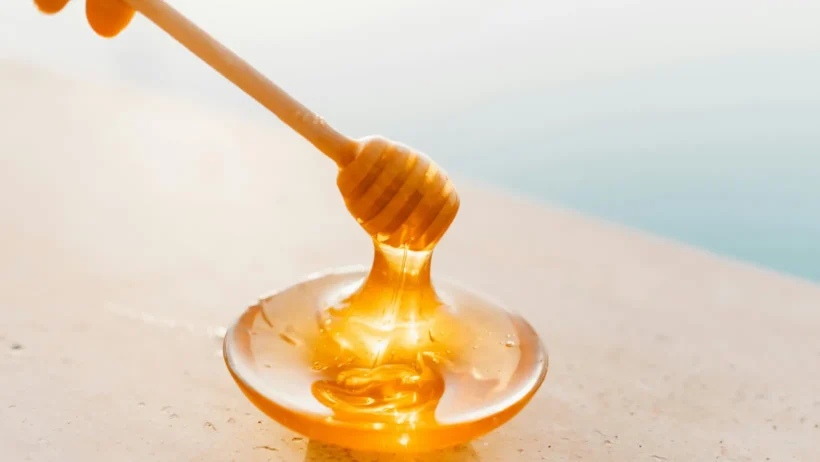
Genuine raw honey is more than sugar. It is a complex mix of carbohydrates, trace amino acids, and antioxidants such as flavonoids, phenolic compounds and ascorbic acid, which help counter the oxidative stress linked to chronic disease. It also carries small amounts of minerals like calcium, magnesium and potassium, plus mild antimicrobial activity. That said, honey is still largely sugar, so it is a better-quality sweetener used in moderation, not a health food to consume freely. Its benefits only apply if the honey is real.
How big is the fake honey problem in India?
Large, and sophisticated. Because real honey is slow and costly to produce, some sellers boost profit by diluting it with cheaper corn, rice or fructose syrups. In a widely reported 2020 investigation by the Centre for Science and Environment, about 77% of tested honey samples, including several leading brands, failed an advanced NMR test for sugar-syrup adulteration, even though many passed basic purity checks. The syrups used were specifically engineered to slip past standard tests. India now mandates NMR testing for honey meant for export, a sign of how serious the problem is.
Do the water and flame tests actually detect fake honey?
Mostly no, and this is the crucial myth to unlearn. The popular home tests can sometimes flag crude, watery dilution, but they cannot detect the sugar-syrup adulteration that dominates the Indian market, because modern syrups mimic honey’s thickness, crystallisation and burning behaviour. Treat these as rough curiosity checks, not proof of purity.
| Home test | What it claims | How reliable it really is |
|---|---|---|
| Water test (honey sinks) | Pure honey settles; fake disperses | Unreliable; syrup-adulterated honey can also settle |
| Flame / matchstick test | Pure honey burns; fake will not | Unreliable; depends on moisture, not purity |
| Blotting paper (no wet mark) | Pure honey is not absorbed | Unreliable; affected by moisture, not adulteration |
| Crystallisation over time | Pure honey crystallises | Weak; both real and fake honey can crystallise or stay liquid |
| Thickness / slow flow | Real honey flows slowly | Weak; syrups are engineered to match texture |
How do labs really detect fake honey?
Detecting modern adulteration takes laboratory analysis, not a kitchen spoon. The tests that actually work look at honey’s chemical fingerprint:
- NMR profiling: maps the full molecular signature and is the most powerful way to catch engineered sugar syrups.
- C3 and C4 sugar (SMR/TMR) tests: detect added cane and corn-derived sugars.
- Sugar profile: checks the natural balance of fructose, glucose, sucrose and maltose, and flags added rice syrup or synthetic sugars.
- HMF (hydroxymethylfurfural): indicates freshness, over-heating and processing.
- Heavy metals and formic acid: confirm the honey is safe and within limits.
This is exactly the kind of testing that separates genuinely pure honey from a convincing fake, and it is why independent lab reports matter more than any home test.
How can you check honey purity when buying?
Since home tests are unreliable, focus on the things that actually reduce your risk:
- Read the label: avoid products listing added sugars, glucose or “invert” syrups; look for 100% pure or raw honey.
- Check for FSSAI compliance: a licence number is a baseline, though it does not by itself prove freedom from syrup.
- Be wary of very low prices: real honey is expensive to produce, so a suspiciously cheap jar is a red flag.
- Prefer honey with published lab reports: especially ones tested for sugar profile and NMR, not just basic parameters.
- Buy from trusted local beekeepers or transparent brands: traceable sourcing lowers the odds of adulteration.
How do you choose genuinely pure honey in India?
The honest answer is that you cannot confirm purity by eye, taste or a home test, so lean on independent testing. Unbox Health market-buys honey and tests it at NABL-accredited labs for label accuracy, sugar profile (to catch added and synthetic sugars), markers like HMF, and contaminants such as heavy metals, then publishes the full reports. You can compare tested honey ratings with their lab reports before you buy. For another everyday product where the label hides the truth, see how chicory shows up in Indian coffee.
The bottom line
Real honey is a worthwhile, antioxidant-rich sweetener, but adulteration with sugar syrup is rampant in India, and the popular home tests simply do not detect it. Skip the water and flame myths, read the label, avoid honey that is too cheap to be real, and rely on independent lab data (ideally including a sugar profile or NMR) to know what you are actually buying.
Frequently asked questions
Does the water test really work for honey?
Not reliably. The idea that pure honey sinks in water while fake disperses does not hold up, because syrup-adulterated honey can behave the same way. It is a rough curiosity check, not proof of purity.
Is most honey in India fake?
A large share is adulterated. A 2020 investigation found about 77% of tested samples, including major brands, failed an advanced NMR test for sugar syrup. Not all honey is fake, but the problem is widespread enough that lab-tested products are the safest choice.
Is honey healthier than sugar?
Real honey has antioxidants and trace nutrients that plain sugar lacks, so it is a better-quality sweetener. But it is still high in sugar and calories, so it should be used in moderation, not treated as a free health food, and the benefits only apply if it is genuine.
Does pure honey crystallise?
It often does, especially in cooler weather, but crystallisation is not a reliable purity test. Both genuine and adulterated honey can crystallise or stay liquid depending on their sugar composition and storage, so do not judge purity by this alone.
What does FSSAI certification guarantee for honey?
An FSSAI licence means the product is registered and meets basic standards, but investigations have shown some syrups are designed to pass standard tests. So treat FSSAI as a baseline and still favour honey with independent lab reports covering sugar profile and NMR.
Sources
- Samarghandian S, Farkhondeh T, Samini F. Honey and Health: A Review of Recent Clinical Research. Pharmacognosy Research. 2017;9(2):121-127. doi.org/10.4103/0974-8490.204647
- Centre for Science and Environment (CSE). Honey adulteration investigation, 2020. cseindia.org
- Food Safety and Standards Authority of India (FSSAI). Standards and press statements on honey adulteration, 2020. fssai.gov.in
- Unbox Health. Honey: lab-tested ratings. unboxhealth.in
Reviewed by: Mruga Dholakia, Food Scientist & Nutritionist | Last updated: July 2026