




Most multivitamins and fat-soluble vitamins (A, D, E, K) absorb best with a meal containing some fat. Calcium and iron compete for absorption and should be spaced apart, and tea or coffee within an hour of an iron supplement can cut its absorption by 50 to 90%. Vitamin D helps absorb calcium, so that pair works better taken together. Following the timing on a product’s FSSAI-mandated label is more reliable than general rules of thumb.
- Why Does Supplement Timing Actually Matter?
- What Is the Best Time to Take a Multivitamin?
- Should You Take Calcium and Iron Together?
- Why Do Tea and Coffee Interfere With Iron Absorption?
- When Should You Take Fat-Soluble Vitamins?
- Can You Take Vitamin D and Calcium Together?
- Do Zinc and Magnesium Compete With Other Minerals?
- When Is the Best Time to Take Probiotics?
- What Does the Evidence Actually Show?
- What Does FSSAI Say About Supplement Labels?
- Safety: Building a Timing Routine That Works
- The Bottom Line
- Frequently Asked Questions
- Sources
Why Does Supplement Timing Actually Matter?
Supplement timing matters because some nutrients need dietary fat to absorb well, some compete with each other for the same absorption pathway in the gut, and some common drinks contain compounds that actively block absorption. Taking a supplement is not just about the dose on the label; when and with what you take it can change how much of that dose the body actually uses. None of this makes a supplement useless if timed imperfectly, but getting the basics right means less of the dose is wasted.
The interactions below are grouped into three patterns: nutrients that need fat to absorb, minerals that compete with each other, and compounds in food and drink that block specific nutrients. Most people only need to remember two or three rules that apply to what they actually take.
What Is the Best Time to Take a Multivitamin?
The best time to take a standard multivitamin is with a meal that contains some fat, in the morning or afternoon, because most multivitamins include the fat-soluble vitamins A, D, E, and K alongside water-soluble ones. Taking it on a completely empty stomach does not make it work better and is more likely to cause nausea, a common complaint with iron- or zinc-containing multivitamins in particular.
There is no strong evidence that morning is inherently better than evening for a multivitamin’s effectiveness; consistency and pairing with food matter more than the exact clock time. The one caution is a multivitamin containing iron: taking it right before bed with nothing else, or alongside tea or coffee, works against the iron absorption guidance covered next.
Should You Take Calcium and Iron Together?
Calcium and iron should generally be taken at separate times, since calcium has been shown in controlled studies to reduce iron absorption when both are present in the same meal or dose. The effect is well documented in short-term absorption studies, though longer-term studies on people with adequate calcium intake over months have not always found a lasting effect on iron status, suggesting the body partly compensates over time.
Given that short-term inhibition is well established even if the long-term picture is less certain, the simplest practical approach is to take an iron supplement away from your main calcium dose, for example iron in the morning and calcium at night, rather than assuming a multivitamin containing both nutrients timed the interaction correctly for you.
Why Do Tea and Coffee Interfere With Iron Absorption?
Tea and coffee contain polyphenols that bind to non-heme iron, the form found in most iron supplements and in plant foods, forming a compound the gut cannot absorb. Controlled human studies have measured this effect at roughly 50 to 90% reduction in iron absorption depending on the beverage, its strength, and how much polyphenol it contains, with black tea among the strongest inhibitors tested.
This effect is specific to non-heme iron; heme iron from meat, poultry, and fish is far less affected by tea or coffee. Waiting at least one hour before or two hours after tea or coffee to take an iron supplement avoids most of the reduction, and pairing iron with a source of vitamin C, such as citrus or amla, works in the opposite direction and improves absorption.
When Should You Take Fat-Soluble Vitamins?
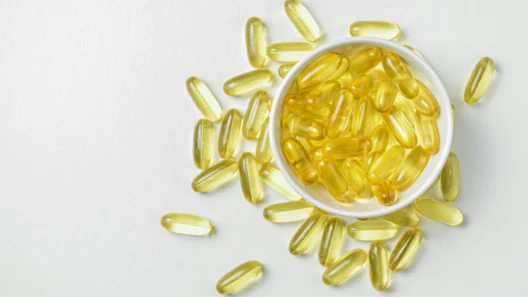
Fat-soluble vitamins A, D, E, and K, along with omega-3 fatty acids, should be taken with a meal that contains some dietary fat, since they are absorbed through the same intestinal pathway used for dietary fat and absorb poorly without it. A completely fat-free meal, such as plain fruit or black coffee, will not support meaningful absorption of these nutrients even if the dose on the label is adequate.
Water-soluble vitamins, including the B-complex vitamins and vitamin C, do not have this requirement. They can be taken with or without food, and any excess the body does not need is excreted in urine rather than stored, which is also why very high doses of water-soluble vitamins carry a lower risk of toxicity than fat-soluble ones.
Can You Take Vitamin D and Calcium Together?
Yes, vitamin D and calcium are usually better taken together rather than apart, since vitamin D is what enables the gut to absorb dietary and supplemental calcium in the first place. This is a supportive relationship rather than a competitive one, unlike the calcium-iron pairing discussed earlier, which is why calcium-vitamin D combination supplements are common and generally reasonable.
Vitamin D itself is fat-soluble, so taking the combination with a meal containing some fat improves absorption of the vitamin D component, which in turn supports calcium uptake.
Do Zinc and Magnesium Compete With Other Minerals?
Zinc, iron, and calcium share overlapping absorption pathways in the gut, so taking large doses of any two together can reduce absorption of one or both, an effect seen most clearly with zinc and iron and with zinc and calcium at higher supplemental doses. Magnesium can also modestly reduce iron and zinc absorption at high intakes, though the effect is generally smaller than the calcium-iron or zinc-iron interactions.
For most people getting these minerals through a balanced diet, this competition is not a meaningful concern. It becomes relevant mainly when supplementing more than one of these minerals at once at doses well above typical dietary intake, in which case spacing the doses by a few hours reduces the overlap.
When Is the Best Time to Take Probiotics?
Probiotics generally survive stomach acid best when taken shortly before or alongside a meal that contains some fat and protein, rather than on a completely empty stomach or with only water. A controlled lab study modelling the human upper gastrointestinal tract (Tompkins et al., 2011, Beneficial Microbes) found significantly better survival of Lactobacillus and Bifidobacterium strains when taken with a meal containing fat and protein than with acidic drinks like fruit juice or water alone.
This runs against the common advice to take probiotics strictly on an empty stomach. Food actually buffers stomach acid, raising its pH and making the environment less hostile to live bacteria as they pass through. In practice, consistency matters more than exact timing: a probiotic taken reliably every day with a meal will do more good than one dosed at a theoretically perfect moment but skipped half the week.
What Does the Evidence Actually Show?
Some of these timing rules rest on strong, repeated human data, while others are reasonable extrapolations from smaller studies. It helps to know which is which before building a routine around them.
| Interaction | Best available evidence | Tested in humans? | How settled |
|---|---|---|---|
| Fat improves absorption of vitamins A, D, E, K | Long-established physiology, multiple absorption studies | Yes | Well established |
| Tea/coffee polyphenols reduce non-heme iron absorption | Controlled absorption studies (Hallberg and related work) | Yes | Well established |
| Calcium reduces iron absorption short-term | Controlled meal studies | Yes | Well established short-term; long-term effect on iron status less clear |
| Vitamin D improves calcium absorption | Long-established physiology | Yes | Well established |
| Zinc and iron compete for absorption | Multiple controlled studies | Yes | Reasonably well established at supplemental doses |
What Does FSSAI Say About Supplement Labels?
FSSAI’s Health Supplements and Nutraceuticals Regulations require health supplement labels to carry directions for use, including the recommended dose and, where relevant to the formulation, guidance on timing such as “take with food.” This labelling requirement exists precisely because absorption and tolerability depend on how a product is taken, not only on what is in it.
Following a specific product’s label instructions takes precedence over general timing rules like the ones in this guide, since the manufacturer’s directions account for that product’s exact formulation, such as whether iron is combined with calcium or vitamin C in the same tablet.
Safety: Building a Timing Routine That Works
- Take fat-soluble vitamins (A, D, E, K) and omega-3s with a meal that contains some fat.
- Space calcium and iron supplements a few hours apart, or take them at different times of day.
- Keep iron supplements at least one hour before or two hours after tea or coffee.
- Pair iron with a vitamin C source, such as citrus fruit or amla, to improve absorption.
- Check the label’s directions for use first; a product-specific instruction overrides a general rule.
- If you are combining several mineral supplements (iron, zinc, calcium, magnesium), space them through the day rather than taking them all at once. You can compare tested options on Unbox Health’s multivitamin ratings page.
The Bottom Line
Timing will not fix a poorly formulated supplement, but it can meaningfully change how much of a well-formulated one your body actually absorbs. Take fat-soluble nutrients with a fatty meal, keep calcium and iron apart, keep iron away from tea and coffee, and default to the label’s directions for use over general rules whenever the two disagree.
Frequently Asked Questions
Should I take calcium and iron at the same time?
No, it is better to space them apart. Calcium can reduce iron absorption when both are present in the same meal or dose, an effect seen consistently in short-term studies. Taking iron on an empty stomach or with vitamin C, and calcium at a separate time of day, avoids this competition.
Does tea or coffee affect supplement absorption?
Yes, for iron specifically. Polyphenols in tea and coffee can reduce non-heme iron absorption by roughly 50 to 90% depending on the beverage and strength, an effect documented in controlled human studies. Taking iron supplements at least one hour before or two hours after tea or coffee avoids most of this reduction.
Can I take vitamin D and calcium together?
Yes, and it is often better to. Vitamin D helps the gut absorb calcium, so the two nutrients are commonly taken together rather than separated. This pairing does not raise the same absorption-competition concern seen between calcium and iron, since vitamin D supports rather than competes with calcium uptake.
Why should some supplements be taken with food?
Fat-soluble vitamins (A, D, E, K) and omega-3 fatty acids absorb significantly better when taken alongside a meal containing some dietary fat, since they are absorbed through the same pathway as dietary fat. Water-soluble vitamins like B-complex and vitamin C do not have this requirement and can be taken with or without food.
Do zinc and iron compete for absorption?
Yes. Zinc and iron are absorbed through overlapping pathways in the gut, so taking high doses of one can reduce absorption of the other when combined. If you are supplementing both, spacing them a few hours apart, or taking iron with vitamin C and zinc at a separate time, reduces this competition.
What does the FSSAI label tell you about how to take a supplement?
FSSAI requires health supplements to carry directions for use on the label, including recommended dose and timing where relevant, under the Health Supplements and Nutraceuticals Regulations. Following the label's stated timing and dose is the simplest way to get the intended benefit, rather than relying on general advice that may not apply to a specific product's formulation.
Sources
- Hallberg, L., Rossander-Hulten, L. (2000). Inhibition of non-haem iron absorption in man by polyphenolic-containing beverages. British Journal of Nutrition.
- Hallberg, L., et al. Calcium supplementation: effect on iron absorption. American Journal of Clinical Nutrition.
- Cook, J. D., et al. The inhibitory effect of dietary calcium on iron bioavailability: a cause for concern? Nutrition Reviews.
- Food Safety and Standards Authority of India. Food Safety and Standards (Health Supplements, Nutraceuticals, Food for Special Dietary Use, Food for Special Medical Purpose, Functional Food and Novel Food) Regulations, 2016. https://fssai.gov.in/upload/uploadfiles/files/Compendium_Nutra_29_09_2021.pdf
- National Institutes of Health, Office of Dietary Supplements. Iron Fact Sheet for Health Professionals.
Reviewed by: Mruga Dholakia, Food Scientist & Nutritionist | Last updated: August 2026