


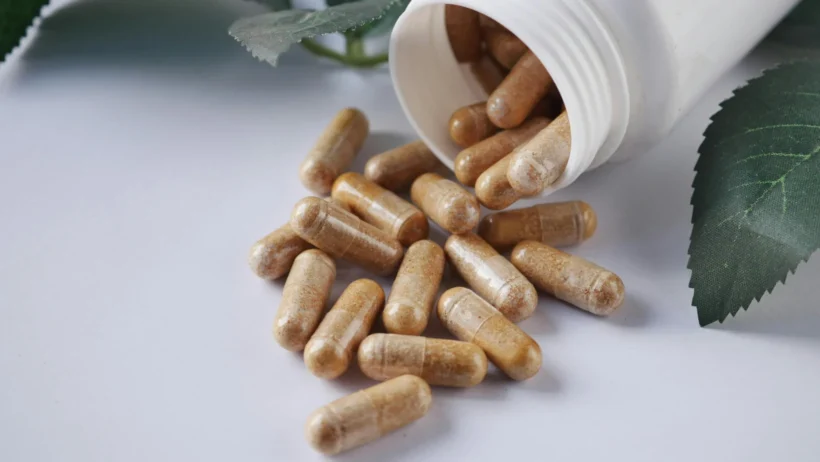

Constipation, nausea, stomach pain and dark stools are the common iron supplement side effects, and they are driven by unabsorbed iron sitting in the gut. A 2017 randomised trial found single doses on alternate days absorbed about a third more iron than daily dosing. ICMR-NIN caps intake at 45 mg a day.
- What are the side effects of iron supplements?
- Why do iron supplements cause these side effects?
- How can you reduce iron supplement side effects?
- Which form of iron is easiest on the stomach?
- How much iron do you need per day?
- What helps and what blocks iron absorption?
- Can you take too much iron?
- Why is iron deficiency so common in India?
- How to choose an iron supplement
- When to see a doctor instead of self-supplementing
- The bottom line
- Frequently asked questions
- Sources
The common iron supplement side effects are constipation, nausea, stomach pain, a metallic aftertaste and black stools. They are dose related rather than brand related, and they are the main reason people stop taking iron before their haemoglobin recovers. Most of them can be reduced without abandoning the supplement.
That matters in a country where more than half of adult women are anaemic. Stopping a supplement because it is uncomfortable is a bigger problem than the discomfort itself, and the fix is usually about dose and timing rather than switching products.
What are the side effects of iron supplements?
Digestive symptoms account for almost all of them. Constipation is the most frequently reported, followed by nausea, upper abdominal pain, bloating and, less often, diarrhoea. A metallic taste and dark or black stools also occur, and both are harmless. None of these signal that the supplement is defective.
Black stools are worth understanding separately. Unabsorbed iron oxidises as it passes through the digestive tract, which darkens stool colour. This is expected. What is not expected is stool that is black and tarry with a strong odour, which can indicate bleeding and needs medical attention rather than reassurance.
The intensity tracks the elemental iron dose. A tablet delivering 60 mg of elemental iron is far more likely to cause symptoms than one delivering 18 mg. That is why the elemental iron figure on the label, not the total weight of the salt, is the number to compare across products.
Why do iron supplements cause these side effects?
Your body absorbs only a fraction of an oral iron dose. The rest stays in the intestine, where free iron irritates the gut lining and interacts with the gut microbiota. Higher doses do not proportionally increase absorption, so beyond a point extra iron mostly adds side effects rather than benefit.
The regulator behind this is hepcidin, a hormone that controls how much iron your body lets in. A single iron dose raises hepcidin, and that rise suppresses absorption of the next dose for roughly the following 24 hours. Taking iron twice a day therefore works against itself.
This is the mechanism that makes dosing strategy more useful than product switching. If hepcidin is blocking absorption, a gentler sounding formulation at the same schedule will not change much. Changing the schedule will.
How can you reduce iron supplement side effects?
Alternate day dosing has the strongest evidence. In two open label randomised trials published in The Lancet Haematology in 2017, iron depleted women aged 18 to 40 given 60 mg of iron as single doses on alternate days absorbed roughly a third more iron in total than those given the same doses on consecutive days.
The same trials found that splitting a daily dose into two raised serum hepcidin and reduced absorption compared with one morning dose. So a single dose beats a split dose, and alternate days beat consecutive days. Fewer doses in the gut also means fewer opportunities for irritation.
- Take one dose, not two. Splitting the dose increases hepcidin and lowers total absorption.
- Try alternate days. Discuss it with your doctor first, particularly if you are pregnant or on a treatment regimen.
- Pair it with vitamin C. A citrus fruit or an amla based source at the same time improves uptake of non haem iron.
- Keep it away from chai, coffee, milk and calcium tablets. Leave at least an hour on either side.
- Increase fibre and water for constipation rather than immediately halving the dose on your own.
Which form of iron is easiest on the stomach?
The elemental iron dose matters more than the salt. Different iron compounds carry very different amounts of actual iron per milligram of tablet, so a 300 mg ferrous sulphate tablet and a 300 mg ferrous gluconate tablet deliver quite different iron loads and quite different symptom risks.
| Form | Elemental iron by weight | What to know |
|---|---|---|
| Ferrous sulphate (heptahydrate) | About 20% | Cheapest and most studied; most commonly linked to digestive complaints |
| Ferrous fumarate | About 33% | More iron per tablet, so compare the elemental figure, not the tablet size |
| Ferrous gluconate | About 12% | Often described as gentler, which may simply reflect a lower iron dose |
| Iron bisglycinate (chelated) | Varies by formulation, check the label | Marketed as better tolerated; head to head evidence against sulphate is limited |
| Carbonyl iron | Varies by formulation, check the label | Slower release; still delivers substantial elemental iron |
Read the label for the phrase elemental iron. Many Indian packs list the salt weight prominently and the elemental figure in small print, which makes two products look comparable when they are not.
How much iron do you need per day?
ICMR-NIN’s 2020 nutrient requirements set the Recommended Dietary Allowance at 29 mg a day for adult women and 19 mg for adult men. These are notably higher than international figures, and the reason is dietary: Indian diets are largely plant based, and iron from plant foods is absorbed less efficiently.
| Group | EAR, mg/day | RDA, mg/day | Upper limit, mg/day |
|---|---|---|---|
| Adult men, above 18 years | 11 | 19 | 45 |
| Adult women, above 18 years | 15 | 29 | 45 |
| Pregnant women | 21 | 27 | 45 |
| Lactating women | 16 | 23 | 45 |
| Girls, 16 to 18 years | 18 | 32 | 45 |
| Boys, 16 to 18 years | 18 | 26 | 45 |
For comparison, the same ICMR-NIN report notes the US Institute of Medicine figure for adult women is 18 mg against India’s 29 mg. That difference is about absorption assumptions, not about Indian bodies needing more iron in absolute terms.
What helps and what blocks iron absorption?
Non haem iron, the type in plant foods and in most supplements, is highly sensitive to what you eat alongside it. Getting this right often makes more difference than the supplement you choose, and it costs nothing.
| Improves absorption | Reduces absorption |
|---|---|
| Vitamin C, from citrus, amla, guava or a supplement taken together | Tea and coffee polyphenols, including chai |
| Meat, fish and poultry eaten in the same meal | Phytates in whole grains, legumes and nuts |
| Fermented and sprouted preparations, which lower phytate content | Calcium and dairy, including calcium tablets |
| An empty stomach, if you can tolerate it | Antacids and acid reducing medicines |
The practical version is simple. Take iron with a vitamin C source and keep it at least an hour away from chai, milk, curd and calcium supplements. In an Indian eating pattern, the tea timing is usually the single highest impact change.
Can you take too much iron?
Yes. ICMR-NIN sets a Tolerable Upper Limit of 45 mg a day for adults, including during pregnancy and lactation, and 40 mg for children up to 12 years. The upper limit covers all sources combined, so a fortified food plus a multivitamin plus an iron tablet can add up faster than expected.
Unlike most minerals, the body has no active route to excrete excess iron, so it accumulates. People with haemochromatosis, an inherited iron overload condition, or those receiving repeated blood transfusions can be harmed by supplements that are harmless to everyone else.
Acute overdose is a separate and more urgent risk. Iron tablets are among the leading causes of accidental poisoning in young children, partly because sugar coated tablets resemble sweets. Store iron supplements out of reach and treat a suspected overdose as an emergency.
Why is iron deficiency so common in India?
The scale is documented. India’s National Family Health Survey 5, conducted in 2019 to 2021, found 57.0 percent of women aged 15 to 49 anaemic, against 25.0 percent of men in the same age band. Among children aged 6 to 59 months the figure was 67.1 percent, up from 58.6 percent in the previous round.
Three factors compound. Diets are predominantly plant based, so most dietary iron is the less absorbable non haem form. Those same diets are high in phytates from whole grains and legumes. And tea with meals, near universal in Indian households, further suppresses absorption.
India’s public health response, the Anaemia Mukt Bharat programme, uses weekly iron and folic acid tablets containing 60 mg of elemental iron and 500 micrograms of folic acid for adolescents aged 10 to 19 and for women of reproductive age, with daily dosing for pregnant and lactating women. Note that the national programme itself uses weekly, not daily, dosing for most groups.
How to choose an iron supplement
Two things decide whether an iron supplement is worth taking: how much elemental iron it actually delivers, and whether it is clean. Neither is answered by the words on the front of the pack.
- Find the elemental iron figure. Compare that number against your requirement, not the salt weight or the gummy count.
- Check for vitamin C in the formulation. It is a genuine absorption enhancer rather than a marketing addition.
- Look for an FSSAI licence number. Its absence on a packaged supplement sold in India is a reason to stop there.
- Look for a third party heavy metal report. FSSAI’s own FAQ confirms supplements fall under the foods not specified category of the 2011 Contaminants Regulations, which permits up to 2.5 mg/kg lead, 1.1 mg/kg arsenic, 1.5 mg/kg cadmium and 1.0 mg/kg mercury. There is no tighter supplement specific limit.
Where a brand does not publish those numbers, independent testing is the only way to check them. You can compare lab tested results across products on the Unbox Health iron supplements ratings page. The same label reading approach applies across supplement categories, as our guide to multivitamin label accuracy shows.
When to see a doctor instead of self-supplementing
Ideally before you start. Anaemia is a finding, not a diagnosis, and iron deficiency is only one of its causes. Taking iron for the wrong kind of anaemia delays the real treatment and adds side effects for no benefit.
- Get tested first. Haemoglobin plus serum ferritin distinguishes iron deficiency from other causes. Persistent fatigue with a normal ferritin is not an iron problem.
- Other causes are common in India. Vitamin B12 deficiency and thalassaemia trait both produce anaemia and neither responds to iron.
- Unexplained anaemia in men or in women after menopause needs investigation for a source of blood loss, not a supplement.
- Pregnancy, kidney disease, inflammatory bowel disease or known iron overload all require medical supervision of any iron dose.
- Severe or worsening symptoms on iron, including vomiting or black tarry stools, mean stopping and seeking advice.
The bottom line
Iron supplement side effects are common, predictable and mostly manageable. They come from unabsorbed iron in the gut, they scale with the elemental iron dose, and the evidence based fix is a single dose on alternate days with vitamin C, kept away from tea, milk and calcium.
The two numbers to know are ICMR-NIN’s RDA, 29 mg a day for women and 19 mg for men, and the upper limit of 45 mg from all sources combined. Confirm you actually have iron deficiency before starting, and check the elemental iron figure and a heavy metal report before choosing a product.
Frequently asked questions
How can I stop iron supplements from upsetting my stomach?
Three approaches help. Take a single dose rather than splitting it, try alternate days instead of daily, and take it with vitamin C rather than with tea, coffee, milk or a calcium tablet. A 2017 randomised trial found alternate day single doses absorbed roughly a third more iron than consecutive daily dosing.
Should I take iron every day or every other day?
Alternate day dosing has better absorption evidence. In a 2017 Lancet Haematology trial in iron depleted women, single doses on alternate days produced about a third more cumulative iron absorption than the same doses taken on consecutive days, because hepcidin, the hormone that blocks iron uptake, has time to fall between doses. Discuss any change with your doctor.
How much iron do I need per day in India?
ICMR-NIN's 2020 requirements set the RDA at 29 mg a day for adult women and 19 mg for adult men, with pregnancy at 27 mg and lactation at 23 mg. These are higher than international figures because Indian diets are largely plant based and iron from them is absorbed less efficiently.
Can you take too much iron?
Yes. ICMR-NIN sets a Tolerable Upper Limit of 45 mg a day for adults, including during pregnancy and lactation. Iron accumulates in the body, and people with haemochromatosis or repeated transfusions can be harmed by supplements. Iron tablets are also a leading cause of poisoning in young children, so store them out of reach.
Which form of iron is easiest on the stomach?
Elemental iron dose matters more than the salt. Ferrous sulphate is the cheapest and most studied but is often the least comfortable. Ferrous gluconate carries less elemental iron per tablet, so tolerance may reflect the smaller dose. Chelated forms such as iron bisglycinate are marketed as gentler, though head to head evidence is limited.
What blocks iron absorption?
Tea and coffee polyphenols, phytates in whole grains and legumes, calcium and dairy, and acid reducing medicines all lower non haem iron absorption. Vitamin C is the strongest enhancer. A practical rule: take iron with a citrus source and keep it at least an hour away from chai, milk and calcium tablets.
When should I see a doctor instead of self-supplementing?
Before starting, ideally. Anaemia has causes other than low iron, including B12 deficiency, thalassaemia trait, which is common in parts of India, and blood loss that needs investigating. A haemoglobin and serum ferritin test tells you whether iron is the right fix. Persistent fatigue with a normal ferritin is not an iron problem.
Sources
- ICMR-NIN Expert Group on Nutrient Requirements for Indians (2020). Recommended Dietary Allowances (RDA) and Estimated Average Requirements (EAR), Annexures A1, A2 and A6. nin.res.in
- Stoffel, N.U., Cercamondi, C.I., Brittenham, G., Zeder, C., Geurts-Moespot, A.J., Swinkels, D.W., Moretti, D. and Zimmermann, M.B. (2017). Iron absorption from oral iron supplements given on consecutive versus alternate days and as single morning doses versus twice-daily split dosing in iron-depleted women: two open-label, randomised controlled trials. The Lancet Haematology, 4(11), pp. e524-e533. pubmed.ncbi.nlm.nih.gov
- Ministry of Health and Family Welfare, Government of India (2022). National Family Health Survey (NFHS-5) 2019-21, India Fact Sheet, indicators 92 to 98. dhsprogram.com
- Ministry of Health and Family Welfare, Government of India. Anemia Mukt Bharat Operational Guidelines, Table 4: Prophylactic dose and regime for Iron Folic Acid supplementation. nhm.gov.in
- Food Safety and Standards Authority of India (2021). Frequently Asked Questions on the Health Supplements, Nutraceuticals, Food for Special Dietary Use, Food for Special Medical Purpose and Functional Food Regulations, 2016, Question 76, read with the Contaminants, Toxins and Residues Regulations, 2011. fssai.gov.in
Reviewed by: Mruga Dholakia, Food Scientist & Nutritionist | Last updated: July 2026