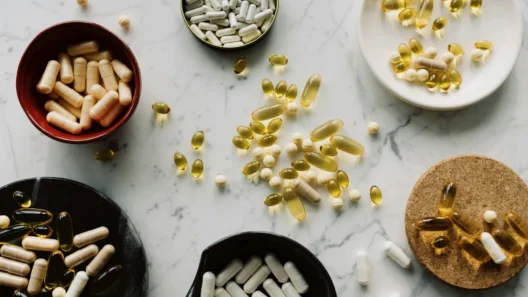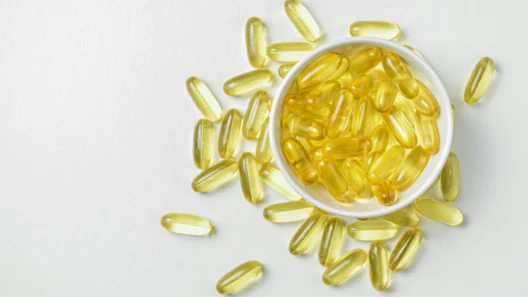




Omega-3 comes in three forms. EPA and DHA do most of the work in the body. ALA, the form in flax, chia and walnuts, must be converted first, and in men only 0.3% to 8% converts to EPA. Most Indian omega-3 supplements supply ALA alone.
- What are the three types of omega-3?
- How much omega-3 do Indians need?
- How well does ALA convert to EPA and DHA?
- Why do most Indians fall short on EPA and DHA?
- Does being vegetarian lower your EPA and DHA levels?
- What should you look for on an omega-3 label?
- Fish oil or algal oil: which should you choose?
- Is more omega-3 always better?
- The bottom line
- Frequently asked questions
- Sources
What are the three types of omega-3?
Alpha-linolenic acid (ALA), eicosapentaenoic acid (EPA) and docosahexaenoic acid (DHA). ALA is the plant form found in flaxseed, chia and walnuts. EPA and DHA are the long-chain forms found in oily fish, algae and, in small amounts, eggs. Only ALA is strictly essential in the diet, but EPA and DHA are the forms the body actually uses.
That distinction is the whole story. DHA is a structural component of brain and retinal tissue. EPA is the precursor for several signalling molecules involved in inflammation. ALA’s main biological route is to be converted into those two, and it is not good at it.
This is why a label saying “omega-3” tells you almost nothing. A product supplying 1,000 mg of flaxseed oil and one supplying 500 mg of EPA plus DHA both qualify as omega-3 supplements. They are not interchangeable.
How much omega-3 do Indians need?
ICMR-NIN 2020 recommends 2.2 grams a day of total n-3 PUFA for Indian adults, alongside 6.6 grams of n-6. Separately, the FAO and WHO 2010 expert consultation set an adequate intake of 250 mg a day specifically for EPA plus DHA combined. These two numbers answer different questions.
| Recommendation | Amount | What it covers |
|---|---|---|
| ICMR-NIN 2020, total n-3 PUFA | 2.2 g/day | All omega-3, mostly ALA in Indian diets |
| ICMR-NIN 2020, total n-6 PUFA | 6.6 g/day | Mainly from cooking oils |
| FAO/WHO 2010, EPA plus DHA | 250 mg/day | The long-chain forms only |
| FAO/WHO 2010, pregnancy and lactation | 250 mg/day plus 100 to 200 mg DHA | Additional DHA for fetal and infant development |
| ICMR-NIN 2020, visible cooking oil | 20 to 50 g/day | Not more than 27 g for a 2,000 kcal diet |
Hitting 2.2 grams of total n-3 from flax or mustard oil is achievable in an Indian diet. Hitting 250 mg of EPA plus DHA without fish, eggs or a supplement is not, because plant foods contain neither in meaningful amounts.
How well does ALA convert to EPA and DHA?
Poorly, and the rate differs sharply by sex. In healthy young men, roughly 0.3% to 8% of dietary ALA converts to EPA, and conversion to DHA is under 4% and often undetectable. In healthy young women the figures are far higher, around 21% to EPA and 9% to DHA, a difference attributed to oestrogen.
| Conversion step | Healthy young men | Healthy young women |
|---|---|---|
| ALA to EPA | 0.3% to 8% | Around 21% |
| ALA to DHA | Under 4%, often undetectable | Around 9% |
| ALA burned for energy | 15% to 35% | 15% to 35% |
This matters for how you read advice. The blanket claim that ALA conversion is negligible is drawn largely from studies in men. It is a reasonable planning assumption for men, and an overstatement for premenopausal women, though even 9% leaves a large gap against a 250 mg DHA target.
Two other factors suppress conversion further. Between 15% and 35% of dietary ALA is simply oxidised for energy. And a high intake of omega-6 linoleic acid competes for the same enzymes, which is directly relevant to Indian kitchens.
Why do most Indians fall short on EPA and DHA?
Three reasons stack up: low oily fish intake, heavy use of omega-6 rich cooking oils, and reliance on ALA sources that do not convert well. The result is an intake pattern that can meet the ICMR total n-3 figure while still leaving EPA and DHA far below the FAO/WHO 250 mg mark.
The cooking oil point is the one most often missed. Sunflower, safflower and corn oil are high in linoleic acid, the main dietary omega-6. Because n-6 and n-3 compete for the same desaturase enzymes, a diet heavy in these oils actively reduces the small amount of ALA that would otherwise convert.
ICMR-NIN 2020 puts the n-6 recommendation at 6.6 grams against 2.2 grams of n-3, a three to one ratio. Indian diets built on refined oils and packaged snacks routinely run far wider than that, which shifts the balance further from EPA and DHA production.
There is a practical lever here. ICMR-NIN 2020 caps visible cooking oil at 20 to 50 grams a day, and not more than 27 grams on a 2,000 kcal diet. Staying inside that range, and choosing oils lower in linoleic acid, reduces the omega-6 load competing with whatever ALA you do eat.
Does being vegetarian lower your EPA and DHA levels?
Measurably, yes. A 2013 review by Saunders, Davis and Garg in the Medical Journal of Australia reported that blood and tissue EPA and DHA concentrations in lacto-ovo-vegetarians are around 30% lower than in meat-eaters, and in vegans 40% to 50% lower than in omnivores.
Notably, ALA intakes are similar across vegetarians and non-vegetarians. The gap is not in how much omega-3 people eat, it is in which form. EPA intake is low in vegetarians and DHA is close to absent in vegans, and conversion does not close that distance.
For a country where 39% of adults identify as vegetarian and 81% restrict meat in some way, this is a population-scale issue rather than a niche one. Our companion piece on omega-3 deficiency among Indian vegetarians covers the food-source side in more detail.
What should you look for on an omega-3 label?
Read the EPA and DHA numbers, not the headline number. The front of the pack usually states total oil weight, such as 1,000 mg fish oil. The EPA and DHA content sits on the back and is always lower, sometimes as little as 300 mg of the 1,000.
| What the label says | What it actually means | What to check instead |
|---|---|---|
| “1,000 mg omega-3” | Usually total oil weight, not active omega-3 | The EPA and DHA milligrams listed separately |
| “Omega 3-6-9” | Omega-6 and 9 are not in short supply in Indian diets | Whether EPA and DHA are present at all |
| “Plant-based omega-3” | Usually ALA from flax, which converts poorly | Whether it is algal oil, which supplies DHA directly |
| “Triple strength” | An unregulated marketing term | The actual EPA plus DHA total per serving |
| Total fish oil weight only | Active content is not disclosed | Treat missing EPA and DHA figures as a red flag |
| “Molecularly distilled” | Refers to processing, not a purity guarantee | Independent test results for heavy metals and oxidation |
Two further checks are worth making. Fish oil oxidises, and rancid oil is both less effective and unpleasant to take, so packaging and expiry matter more than for a dry tablet. And because oily fish sit high in the food chain, heavy metal contamination is a legitimate testing question rather than a theoretical one.
Label accuracy is where independent testing earns its place. Unbox Health is India’s independent supplement and food testing platform, using NABL-accredited labs to verify products with no brand involvement, including whether declared EPA and DHA content matches what is in the capsule. You can review the lab-tested omega-3 supplement ratings with full reports.
Fish oil or algal oil: which should you choose?
Fish oil supplies both EPA and DHA and is generally cheaper per milligram. Algal oil supplies DHA directly, sometimes with EPA, and suits vegetarian and vegan diets. Both bypass the conversion problem entirely, which is the reason to prefer either over an ALA-only product.
Algae are where the fish get their omega-3 in the first place. Small fish eat algae, larger fish eat smaller fish, and EPA and DHA accumulate up the chain. Taking algal oil skips that chain, which also skips the heavy metal accumulation that comes with it.
Cost is the trade-off. Algal oil typically costs more per milligram of DHA in the Indian market. For a vegetarian who currently gets close to zero DHA, that is usually still the more sensible spend than a larger dose of flaxseed oil.
Is more omega-3 always better?
No. The FAO/WHO adequate intake is 250 mg a day of EPA plus DHA, not a floor to be multiplied. Higher intakes are used in specific clinical situations under supervision, but there is no general case for treating a larger dose as automatically better for a healthy adult.
High doses of EPA and DHA can affect blood clotting, which matters if you take blood thinners or are scheduled for surgery. Anyone on anticoagulant medication should discuss omega-3 supplements with their doctor rather than deciding independently.
Pregnancy is the main case for going above the baseline, and FAO/WHO gives a specific figure: the adult 250 mg plus an additional 100 to 200 mg of DHA a day. That is a defined target, not an invitation to take as much as possible.
Fish allergy is a straightforward contraindication for fish oil, and algal oil is the practical alternative. If you are unsure whether you need a supplement at all, a diet review is a cheaper first step than a year of capsules.
The bottom line
Not all omega-3 is equal, and the difference is not marketing, it is biochemistry. EPA and DHA are what the body uses. ALA has to be converted, and in men that conversion runs as low as 0.3%. A supplement supplying only ALA is answering a different question from the one most people are asking.
Practically: aim for the FAO/WHO 250 mg a day of EPA plus DHA, read the back of the label rather than the front, and treat a missing EPA and DHA breakdown as a reason to look elsewhere. If you are vegetarian, algal oil solves the form problem that flaxseed oil does not.
Frequently asked questions
How much EPA and DHA should you get per day?
The FAO and WHO 2010 expert consultation set an adequate intake of 250 mg a day of EPA plus DHA combined for adults. Pregnant and lactating women should add a further 100 to 200 mg of DHA. Separately, ICMR-NIN 2020 recommends 2.2 grams a day of total n-3 for Indian adults.
Does flaxseed oil give you the same benefit as fish oil?
No. Flaxseed oil supplies ALA only. In healthy young men, roughly 0.3% to 8% of ALA converts to EPA and under 4% to DHA. Young women convert better, around 21% and 9%. Even at the higher rates, flaxseed oil does not reliably deliver 250 mg of EPA plus DHA a day.
Do vegetarians really have lower omega-3 levels?
Yes, measurably. A 2013 review in the Medical Journal of Australia found EPA and DHA concentrations around 30% lower in lacto-ovo-vegetarians than in meat-eaters, and 40% to 50% lower in vegans. ALA intake is similar across groups, so the gap comes from the form of omega-3, not the total amount.
Is algal oil as good as fish oil?
For DHA, yes. Algae are the original source of the omega-3 that accumulates in fish, so algal oil supplies DHA directly and sometimes EPA too. It suits vegetarian and vegan diets and skips the heavy metal accumulation that comes with the marine food chain. It usually costs more per milligram.
Why does 1,000 mg on the pack not mean 1,000 mg of omega-3?
Because the front of the pack usually states total oil weight, not active content. A 1,000 mg fish oil capsule might contain only 300 mg of EPA plus DHA combined. The actual breakdown appears on the back. If a product does not disclose EPA and DHA separately, treat that as a red flag.
Do cooking oils affect omega-3 levels?
They can. Sunflower, safflower and corn oil are high in omega-6 linoleic acid, which competes with omega-3 for the same enzymes used in conversion. ICMR-NIN 2020 recommends 6.6 grams of n-6 against 2.2 grams of n-3. Diets heavy in refined oils and packaged snacks usually run well past that ratio.
Can you take too much omega-3?
High doses of EPA and DHA can affect blood clotting, which matters if you take blood thinners or have surgery planned. The FAO/WHO figure of 250 mg a day is an adequate intake, not a minimum to be multiplied. Anyone on anticoagulant medication should discuss omega-3 supplements with a doctor first.
Sources
- Indian Council of Medical Research, National Institute of Nutrition. Nutrient Requirements for Indians: Recommended Dietary Allowances (RDA) and Estimated Average Requirements (EAR), 2020. Hyderabad: ICMR-NIN; 2020. Available from: https://www.nin.res.in/rdabook/brief_note.pdf
- Food and Agriculture Organization of the United Nations, World Health Organization. Fats and Fatty Acids in Human Nutrition: Report of an Expert Consultation. FAO Food and Nutrition Paper 91. Rome: FAO; 2010. Available from: https://www.fao.org/4/i1953e/i1953e00.pdf
- Saunders AV, Davis BC, Garg ML. Omega-3 polyunsaturated fatty acids and vegetarian diets. Medical Journal of Australia. 2013;199(S4):S22-S26. Available from: https://www.mja.com.au/journal/2013/199/4/omega-3-polyunsaturated-fatty-acids-and-vegetarian-diets
- Linus Pauling Institute, Oregon State University. Essential Fatty Acids. Micronutrient Information Center. Available from: https://lpi.oregonstate.edu/mic/other-nutrients/essential-fatty-acids
- Pew Research Center. Eight-in-ten Indians limit meat in their diets, and four-in-ten consider themselves vegetarian. 2021. Available from: https://www.pewresearch.org/short-reads/2021/07/08/eight-in-ten-indians-limit-meat-in-their-diets-and-four-in-ten-consider-themselves-vegetarian/
Reviewed by: Mruga Dholakia, Food Scientist & Nutritionist | Last updated: July 2026